
1599: A Year in the Life of William Shakespeare by James Shapiro

So I picked up this book after reading the sequel, 1606. I don’t remember why, but it was probably because 1599 wasn’t in stock at the time. Anyway, this book approaches Shakespeare’s life and work in a similar way, by zeroing in on a particular year — in this case, 1599, the year that fundamentally changed the course of Shakespeare’s career, and literature.
The great thing about focusing on a single year in Shakespeare’s life is that we can get a much better idea of the social climate of the times in which his seminal works were written. We can understand what was actually going on politically, what the trends in art and literature were, and in turn, what Shakespeare could have experienced and read, which led him to write in the ways he did. I feel that one read isn’t enough, and I do plan to re-read this book as well as 1606 sometime in the future when I’m better-versed in Shakespeare’s work.
Moby Dick by Herman Melville
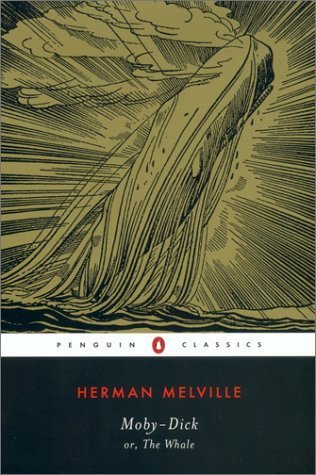
“Call me Ishmael,” as the narrative memorably begins in one of the most enduring stories of all time. In its rich trove of biblical allegories and Shakespearean plot devices, Moby Dick can be read in many ways — such as an honest depiction of the whaling industry and life at sea, as well as a philosophical debate on God and good and evil.
But for me, I read Moby Dick mostly as a tale on the dangers of hubris and ego. The story is narrated from the perspective of a sailor, Ishmael, who serves on a whaling ship headed by one Captain Ahab. As the story goes, Captain Ahab is out on a suicidal revenge quest to hunt Moby Dick, a giant whale that previously bit his leg off. Captain Ahab remains steadfast in the hunt, even as his crew becomes disillusioned, even as he is reminded about the more important things he has to live for back at home. Blinded by his hubris, he keeps hunting, even though he couldn’t see why anymore. There’s only one way this story ends.
The Black Swan: The Impact of the Highly Improbable by Nassim Taleb
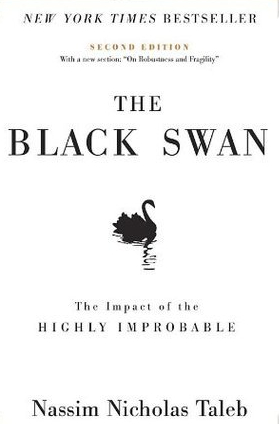
This one is quite a journey, but it’s totally worth the read. Nassim Taleb challenges how we view the world by suggesting that as a society, we have a tendency to underestimate how unpredictable the world really is. After all, that’s how we tend to make sense of the world. We love to “platonify” reality, or fit it into predictable patterns, or rigid laws and theories that make it easier to comprehend.
But of course, the world is a lot more complex than we are comfortable in acknowledging. As Taleb puts it, the world is significantly shaped by “black swans”, or rare, unforeseeable and outlying events. This is a book that really challenges you to be more open-minded about what you don’t know, to always consider the black swans in the otherwise familiar and predictable clockwork of everyday life.
Lessons from Surah Yusuf by Dr Yasir Qadhi

Lovely interpretation of Surah Yusuf, which is called “the best of stories” in the Qur’an. Surah Yusuf was revealed to the Prophet Muhammad (pbuh) during the worst year of his life, or the Year of Sorrow. It was when he went through a string of traumatic events — first losing his wife, then his uncle, and then being violently humiliated in the city of Taif, where he set out to spread the message of Islam. It is said that the Prophet, who was known for his jovial and sunny nature, couldn’t get himself to smile for the entire year. Just as the Prophet found comfort in the Surah, so can we in our own times of hardship.
Dr Yasir Qadhi does an amazing job at discussing Prophet Yusuf’s (pbuh) story in the Surah, managing to be scholarly without being pedantic on the details, such as the differences in opinions. I love how he made this book as readable and practical as possible, especially in how he sums up a list of lessons we can take home and keep close to heart from the Surah.
The Wisdom of Insecurity: A Message for an Age of Anxiety by Alan Watts

I got interested in checking out Alan Watts’s writings after listening to his lectures. Notwithstanding the cringey background music in almost every Alan Watts video, I admire the down-to-earth way in which he taught practical Eastern philosophies to mainstream audiences. He knew how to make philosophy relevant to the everyman, by positioning his content with everyday problems and having a good sense of humor.
At least from reading this book, though, I didn’t quite get the same experience. Half the time, I didn’t understand what he was talking about. I do resonate with his message that perhaps it’s best to let go of our need for certainty, and to instead embrace uncertainty and change — because ultimately, life is uncertain, and life is change. But the problem I had with his view is his disregard for the belief in an afterlife, which he saw as hindering us from truly living in the present. Obviously, that is incompatible with Islamic teachings, and arguably, living for an afterlife is what makes living in this world more conscious and purposeful.
 Izzat Zailan
Leave a Comment