

In the past month or so, I’ve been deeply touched by a song called Deutschland by Rammstein, in which they express their love-hate relationship with their homeland, Germany. On one hand, they want to feel proud of their country. But on the other hand, they struggle to come to terms with its shameful past, especially the crimes of Hitler and the Nazis.
“Deutschland” by Rammstein


Naturally, I set out on a bit of a Nazi Germany rabbit hole. I got curious not only about how and why the Third Reich happened, but its aftermath — what are its legacies that we can still see today? What does the present generation of Germans generally think of their nation’s troubled history?
Despite the valuable insights I had, this dark rabbit hole took a toll on me, to be honest. In combating the world-weariness I felt, I’m glad to have read other great books on varying topics, which I’d be sharing on in this list.
“Hitler” by Ian Kershaw

This was 1,000 pages long, but it was worth every minute. Refreshingly, Ian Kershaw approaches the subject of Hitler in a rather unconventional way. Instead of portraying him as a larger-than-life individual, as most biographers tend to do, Kershaw argues that Hitler was mostly a rather uninteresting person. Before he rose in politics, he was a failed, aimless, and broke art student.
Kershaw invites us to think about the bigger picture, particularly the zeitgeist or social climate of the time. Post-World-War-I, Germany was humiliated, bankrupt, angry, and resentful. Hitler merely took advantage of this situation to propel himself into a dictator. Being a gifted orator, he appealed to the collective hatred of the masses, baselessly using the Jewish people as a scapegoat for Germany’s losses. Hitler was far from a strategic genius, however. He made one fatal mistake after another in his leadership, eventually leading to Nazi Germany’s downfall. Hitler would die by his own pistol in an underground bunker, having spent his last days paranoid, frail, and defeated.
“Nazi Billionaires” by David De Jong

During the Third Reich, many German companies including BMW, Porsche, Volkswagen, Allianz and JAB Holding Company (the company behind Krispy Kreme) made their fortune by seizing firms, banks and assets that were owned by the Jewish people, and also, by exploiting slave labor in the infamous concentration camps. These companies acted as the financial backbone for the Nazi regime.
Many of the present leaders of these companies have remained mostly silent about their dark history. But honestly, I can understand why, to some extent — considering most of them are not actively affiliated with the Nazis. Because there’s only so much you can do about the crimes that you didn’t commit, but that your forefathers did. The way I see it, it’s more useful for us focus on our present crises — especially what has been going on between Israel and Palestine in the past 7 decades, where an uncannily similar situation is at play. But no one wants to talk about that.
“Yes to Life, In Spite of Everything” by Viktor Frankl
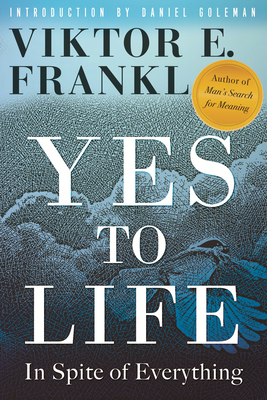
If you’ve never read Viktor Frankl’s work, man, you’re missing out. Man’s Search for Meaning, especially, is a must-read. In case you didn’t know, Frankl was the founder of a branch of psychotherapy called “logotherapy”, which theorizes that creating our own life’s meaning and holding on to it could help us overcome our suffering. While he was working on this theory, the worst happened. He was sent to a concentration camp to die, just because he was Jewish. During this tragic event, however, he seized the opportunity to put his theory to the test.
Yes to Life, In Spite of Everything is a small collection of his lectures, in which he explains the essential concepts in logotherapy. As the title suggests, this is nothing short of a life-affirming read. Frankl’s story is so valuable to every one of us, because it reminds us that even in the worst circumstances such as his, we could decide to find beauty and meaning, to say yes to life. This was a beautiful way to close my Nazi Germany rabbit hole, at least for now.
“The Laws of Human Nature” by Robert Greene
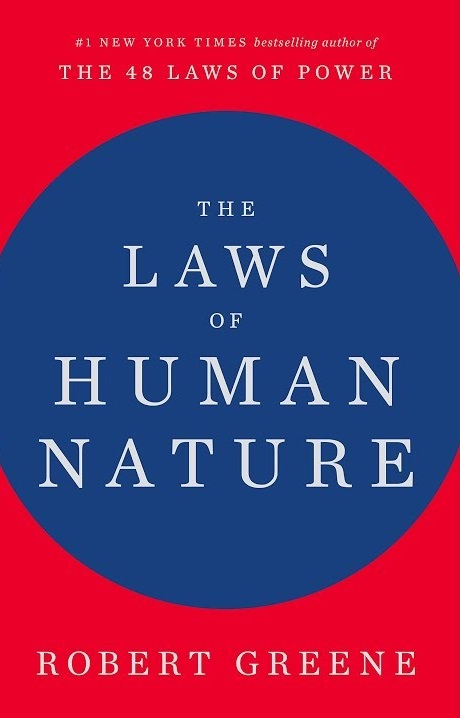
You know you really love an artist when it’s hard for you to pick a favorite from their work. And that’s how I feel about Robert Greene’s books. I don’t exactly have a favorite, because each of his books have deeply impacted me in their own ways.
Last month, I re-read The Laws of Human Nature, in which he discusses in great length about our human tendencies. All of us are by nature irrational. For instance, we all have narcissistic traits and dark sides, and all of us are prone to feeling envy. By being aware of these tendencies in ourselves, we can prevent them from running our lives, and have a better understanding of who we are as a unique individual. And by recognizing these tendencies in others, we can be more emphatic, as well as cautious about the dangerous games that people could play.
“How Kyoto Breaks Your Heart” by Florentyna Leow

During her recent talk, I got to ask Florentyna Leow, or Florie, as she liked to be called, who did she think she was writing to in her book? Thinking back on it, she explained that most likely she was talking to herself, telling her the things that she needed to hear.
There are two things that I think aren’t written about enough in the world — the deep and special attachments we can have with places, and friendship, or the loss thereof. Being about both, How Kyoto Breaks Your Heart is one of my favorite books so far this year. Despite the bittersweet theme, I found this to be very much a comforting read.
In a series of essays, Florie goes over her experience of moving into Kyoto with her friend — the struggles of being an alien in a foreign land and working a modest job, as well as the pleasures of basking in nature, especially the lush persimmons tree that grew outside their home. But she talks too about the demise of their friendship, and how they suddenly grew apart. In her writings, she attempts to make sense of the reality that most relationships aren’t meant to last. Some relationships have an expiry date, she says. Though, in exact, she uses the term shoumikigen for food, meaning “limit of taste”, whereby it would technically still be edible, but it would no longer taste good.
“Freedom from the Known” by Jiddu Krishnamurti

This was my first time reading Krishnamurti’s work, and it was mostly enlightening. As Krishnamurti put it, much of our “known”, or our thought patterns, our habits, and our beliefs about ourselves and the world, were drummed into us by our parents, our peers, school, etc. With that being said, if we were to embrace our own ways of thinking and being, we could live more fulfilling and creative lives.
For the most part, his message resonated well with me. Because so much of life is subjective, yet we tend to let ourselves be at the mercy of other people’s definitions of success and failure. However, at least to me, sometimes it seemed as though Krishnamurti was pushing his readers to question every single thing that they have known. He especially seemed somewhat bitter about religion. So, kids, at the end of the day, you decide which of the “knowns” in your life are necessary to question and let go of.
 Izzat Zailan
Leave a Comment