
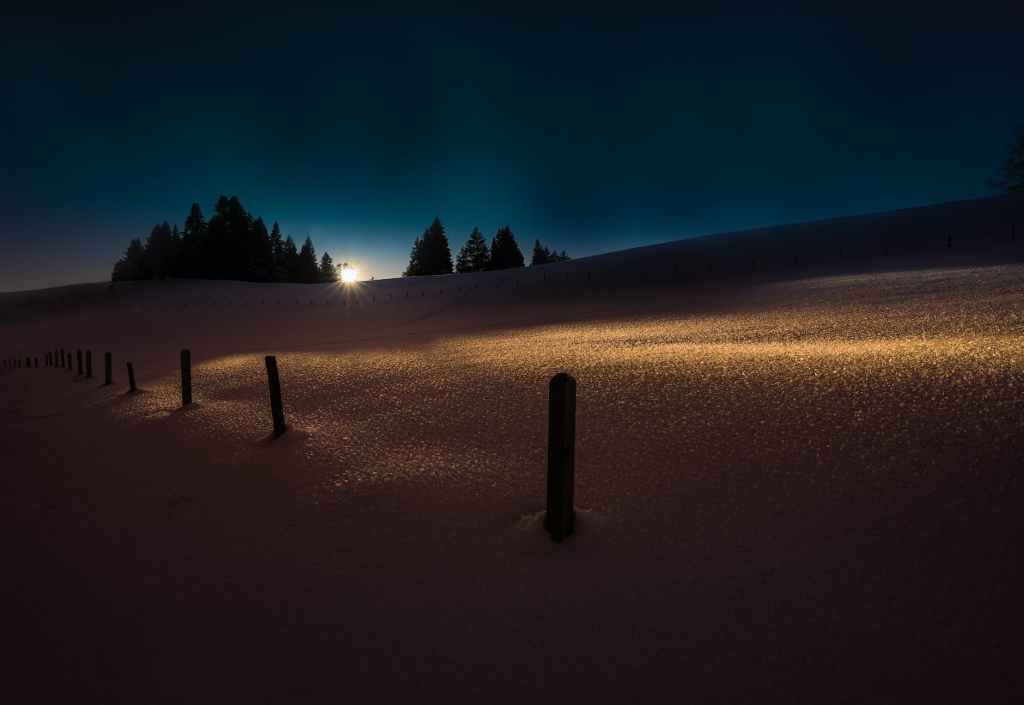
“All great and precious things are lonely.”
John Steinbeck,
East of Eden
In his memoir Journey to Ixtlan, Carlos Castaneda recounts his rigorous purported apprenticeship with a Yaqui shaman named Don Juan. After much toil and discipline, Castaneda finally grasped what it meant to “stop the world”.
Yet, as we often do in learning new and difficult things, Castaneda didn’t realize that he had progressed this far, that Don Juan’s teachings had become second-nature to him. It took Don Juan to point out to Castaneda that he had reached this point of enlightenment, that the world — and something in him — had stopped.
“The world was like it is today, Don Juan,” Castaneda said to his mentor. “What was the thing that stopped in me?”
“What stopped inside you yesterday was what people have been telling you the world is like,” replied Don Juan. “You see, people tell us from the time we are born that the world is such and such and so and so, and naturally we have no choice but to see the world the way people have been telling us it is.”
Despite him having reached this point of enlightenment, though, Castaneda’s memoir doesn’t exactly end on a celebratory note. In its final chapter, we finally get to understand where the memoir’s title comes from.
Castaneda writes about meeting a close friend of Don Juan, named Don Genaro, who gave him an allegory about being unable to find his way back to his hometown of Ixtlan. In his journey back home, Don Genaro had encountered numerous travelers who appeared to be phantoms, who would all tell him that he was going the wrong way, and would pressure him to follow them. Feeling something was amiss, Don Genaro trusted his own instincts and kept walking in the direction that he personally thought was right instead.
And he never stopped walking.
“I will never reach Ixtlan,” he told Castaneda. “Yet in my feelings…In my feelings sometimes I think I’m just one step from reaching it. Yet I never will. In my journey I don’t even find the familiar landmarks I used to know. Nothing is any longer the same.”
Castaneda couldn’t understand what Don Genaro meant with his Ixtlan allegory. After all, he thought, if one wished to go back to, say, Los Angeles, like himself, they could just hop on a bus or drive away in a car.
As it turned out, Don Genaro was informing him about the cost of knowledge, and that is, loneliness. The more knowledge that you accumulate in your lifetime, the more prone you are to feeling lonely for seeing the world differently than most people do. And this is why plenty of intelligent people experience social isolation, and depression.
Ixtlan is symbolic of your old lifestyle, that you can never really “go back home” to. It’s the activities you loved to do, the places you loved to frequent, the company of friends you loved to keep, that you can never experience in the same way that you used to, before you grew as a person, before you knew what you know now.
In your life, you may encounter plenty of “phantoms”, or “ordinary” people that you feel that you have little in common with. They seem to think the same thoughts, and hold on to the same conventions and norms. They may guilt you into adopting the same black-and-white worldviews as theirs, and they may criticize your every whim for standing out of the crowd. Meanwhile, you feel at odds with the rest of the world — a square peg in a round hole.
“Only as a warrior can one survive the path of knowledge,” said Don Juan. “Because the art of a warrior is to balance the terror of being a man with the wonder of being a man.”
Gazing at the loneliness and melancholy in Don Juan and Don Genaro’s faces, Castaneda couldn’t hold back his tears. “For an instant I think I saw,” he writes in his memoir. “I saw the loneliness of man as a gigantic wave which had been frozen in front of me, held back by the invisible wall of a metaphor.”
To some extent, many of us are on a journey to our own Ixtlan. We find ourselves alone in our own sempiternal journey of thinking our own contrarian thoughts, of living by our own values.
Maybe you don’t believe in clinging tooth-and-nail to your nation’s constitution like it is infallible and set in stone, especially when you can obviously see how its policies are hurting communities. Maybe you’re able to point out the fallacy of claims that plant-based food alternatives like almond milk and Beyond Meat burgers are healthier (most of them really aren’t, by the way, as they tend to be extremely processed in order for them to taste, look, and feel as reasonably good as what they’re attempting to substitute). Maybe you’re sensible enough to think that coating food in gold is a dumb-shit idea.
On a more universal level, all of us have to experience the plain reality of adulting. As we mature, we adopt new values and ways of relating with ourselves and the world around us. With that, our old identities die out. Our tastes and interests change. Most of our friendships grow apart and wither away into an awkward nothingness. Some of our friendships implode and shatter into irreparable pieces.
All of us are alone in our own journey. But that doesn’t mean that we have to feel lonely. And that’s one reason why art exists. This is why I’m writing this article. And this is probably why you’re reading this, too.
As novelist John Steinbeck wrote in one of his letters, “A writer out of loneliness is trying to communicate like a distant star sending signals. He isn’t telling or teaching or ordering. Rather he seeks to establish a relationship of meaning, of feeling, of observing. We are lonesome animals. We spend all life trying to be less lonesome.”
Meanwhile, in their album The Dark Side of the Moon, Pink Floyd expresses the loneliness in feeling like you are the only sane person in an insane world. The band conjures a picture of being isolated on the side of the Moon that faces away from the Earth, where there’s nothing except yourself and the black expanse of space. But you don’t have to turn your solitude into loneliness. You can communicate your call to others, because somewhere out there, someone feels the same way as you do — and you can let them know that you’re there.
As the band sings in the track Brain Damage, “If your head explodes with dark forebodings too, I’ll see you on the dark side of the Moon.”
If your journey in life ever grows lonesome or wearisome, you know where my writings are. Better yet, you can share your own art for other people to find.
 Izzat Zailan
Leave a Comment