
Sweet fancy Moses, we’re in September already. It’s crazy how the days are slow, yet the months go by fast, and the years go by even faster.
Anyway, I didn’t get as much reading as I would’ve liked last month. Besides work, I guess I was busy playing Dark Souls. And a lot of my time was also spent just listening to music — as in really listening and giving my full attention to the experience of a song or album.
This wasn’t a bad thing, though. It was refreshing to have an extended period of time to direct my mind towards non-bookish-things. Anyhow, I still managed to read a handful of great books, which you could find below.
“Journey to Ixtlan” by Carlos Castaneda

This was recommended by author Robert Greene in one of his YouTube videos, and I absolutely loved it. The book follows Carlos Castaneda on his purported apprenticeship with a Yaqui shaman. And in it, he shares the lessons he learned about relating with an infinitely expansive world.
Personally, one of the things in the book that touched me most deeply is its theme of loneliness, particularly in how the more you know about the world, the more isolated you feel from the rest of the world. And that’s what the title essentially means — growth comes with grief. To be learned is to be on a never-ending and futile journey in wanting to recapture how sweet and simple our life of blissful ignorance used to be.
“The Ruin of All Witches” by Malcolm Gaskill
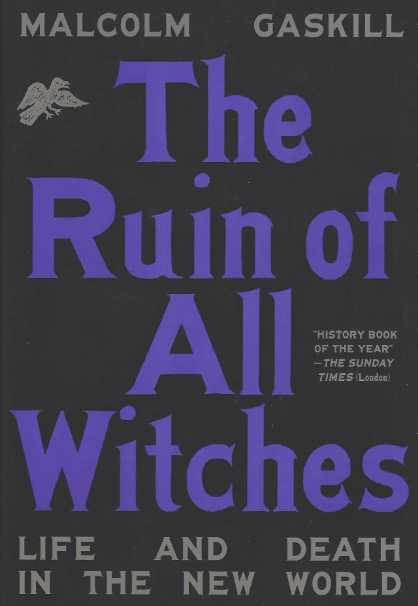
Before the all-famous Salem witch trials, similar cases happened in the small town of Springfield, Massachusetts. The thing about these witch trials is that they weren’t really about witches. It may or may not have been true that witchcraft was actually practiced. But ultimately, the trials are a story of mass paranoia, and how it brought out the worst in the common folk. For one thing, people knew very little about mental illnesses back then, and this definitely played a role in how strange behaviors were simply explained as being supernatural.
Worst of all, people took advantage of this satanic panic to get rid of their enemies. Because once you were accused, you were screwed. It didn’t matter if you weren’t guilty — you’d be tortured anyway until you admitted your “crime” — and then of course, you’d be hanged. It’s scary how this sort of behavior has remain unchanged even today. Despicably enough, especially come election time, we can still see how the power-hungry play on the people’s religious, racial and conservative fears to get what they want for themselves.
“The Life-Changing Magic of Tidying Up” by Marie Kondo

I was able to read this in just one evening, but it left me a whole plate of insightful things to think back on. Marie Kondo’s philosophy can be boiled down to keeping only the things that bring joy to you. Because our material possessions are really a reflection of our inner life. By holding onto items that don’t serve us anymore and bring us pain, we’re keeping a lot of unnecessary baggage in our minds and hearts as well.
A preconception I initially had of Marie Kondo was that she was simply all about ruthlessly decluttering. From reading this, though, I admire how much she actually loves material things. And with that being said, she treats her belongings with the utmost care, to the extent as if they have a life of their own. Even in decluttering, she honors her old things and extends a sense of gratitude to them for having served her to that point.
“The Highly Sensitive Person” by Elaine Aron

Funny enough, I had a near-perfect score in the HSP test that is included in this book. Honestly, reading this felt relieving in a way, because, well, growing up as a sensitive person, you tend to feel like a weirdo a lot of the time. You feel things more deeply, you tend to think longer and harder, and get more easily overstimulated than most people do. But as the author explains in this book — no, you’re not weird at all. Some people are inherently highly sensitive, and it’s neither a good or bad thing. It just depends on how you make use of this trait.
Considering this book was published in the early 90s, I thought it was quite ahead of its time for looking into the attachment theory, which the author attributes as one of the possible factors for why someone grows up highly sensitive. Because not many people know about the theory even today, despite its ability to explain so much of why we are the way we are.
“Mastery” by Robert Greene

I’d go as far as saying that this is the best book on creativity and career planning, as well as one of the most important books that our present and future generations must read. A common problem that we have is that we don’t know what we love to do. So, we just end up spending the rest of our lives with careers and vocations that aren’t fulfilling.
Robert Greene suggests that all of us have a calling, or an innate inclination towards a field or a craft. Mastering a craft that is aligned with our own personality puts us in a position of power, as we would be able to create work that is uniquely our own. In the threat of younger and cheaper labor — and of course, artificial intelligence — we would be indispensable. For some people, their calling might not be as obvious to figure out, which is why the guidance in this book is so valuable. Though, it’s not enough to be a genius at work but a moron with people, so in the classic Robert Greene flair, there are also advice on how to navigate the power games that people play as you work to attain mastery.
 Izzat Zailan
Leave a Comment