
As a general rule, I don’t get my books from second-hand bookstores and book fairs. As it so often happens, there would be a few books that I’d buy even though I’m not all that interested to read them, just because I feel like I could never get them as cheap again if I wanted to. Of course, I don’t actually ever get around to reading them.
So, I instead prefer to have a list of specific titles that I want to read every month, and I mainly get those books from Kinokuniya (where I could get a 10% membership discount).
Every once in a while, though, I run out of ideas on what to read next. And this is when it’s okay for me to browse around in second-hand bookstores (and fairs, if there are any). All of the titles that you see in this list were bought second-hand, except for the new biography on Elon Musk, and The Daily Laws, which I re-read.
“Elon Musk” by Walter Isaacson
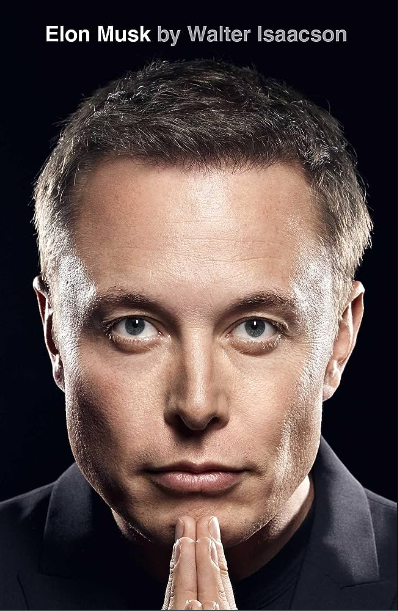
As soon as I learned that this book was in store, I just had to get my hands on a copy. Alongside Robert Caro, Walter Isaacson is one of those biographers who could have me completely spellbound through hundreds and hundreds of pages. What makes his biographies so engaging for me is how he asks the big questions, in order for us to understand the psychology of his subjects.
In this case, Elon Musk is one of the world’s richest and ambitious people, as he has spearheaded the race towards sustainable transportation with Tesla’s electric vehicles. He is also toiling to make space-travel accessible for the masses with SpaceX. Yet, on the other side, Musk is known to be vicious and unfeeling towards other people, especially in achieving his goals at work.
It is quite ironic that saving humanity has always been at the forefront of Musk’s goals, when he is constantly breaking people’s hearts in the process. This leaves us with the question: do we really need to be calloused and cruel in order to be as accomplished as someone like Elon Musk? Would it still be possible to invent the same groundbreaking technologies under the leadership of someone nicer?
“Zen and the Art of Motorcycle Maintenance” by Robert M. Pirsig
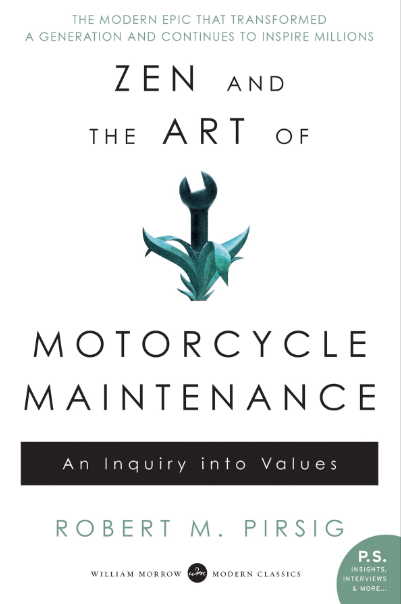
I had been meaning to read this book for a very long while, so finding a used albeit dog-eared copy for RM5 was a godsend. At least from the way I see it, the whole idea of this book is that no one philosophy — whether classical (rational) or romantic (emotional) — is better than the other. Embracing both philosophies is essential for us to live a healthy and balanced life.
I love how the author interweaves his philosophical discussions with his personal story of going on a road trip with his son. As the story goes, he was once so entrenched in seeing the world in strictly classical terms, that it estranged him from his loved ones. Though he was eventually able to open his mind to different worldviews, he still had a lot to learn in connecting with the world around him. We could especially see this in his loving yet strained relationship with his son.
“The Year of Magical Thinking” by Joan Didion
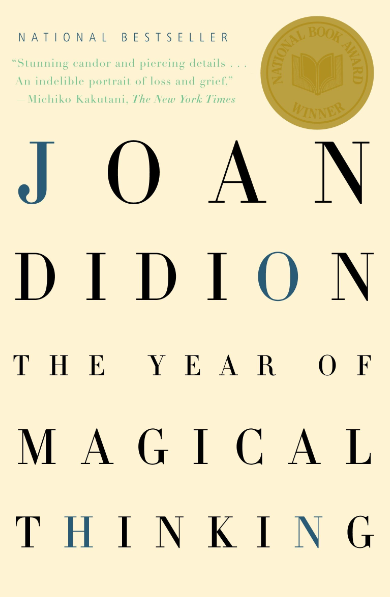
“Life changes fast,” writes the late author Joan Didion. “Life changes in the instant.” Such is the soul-crushing nature of the world. One day you’re living out your normal routines, and all of a sudden, tragedy happens and shocks you to the core. And resulting from this is the piercing grief that may change you for the rest of your life.
I couldn’t help myself from crying as I read this book. The author shares about losing both her husband and daughter in the same year. She writes about her bouts of magical thinking, how on some unconscious level, she still couldn’t believe that they were truly gone. Every now and then, she would catch herself expecting that her husband and daughter would magically come back, and life would finally return to normal. But of course, it never did.
If you look a little closer at the book cover, the blue letters spell out J-O-H-N. It was her husband’s name.
“Turning Pro” by Steven Pressfield
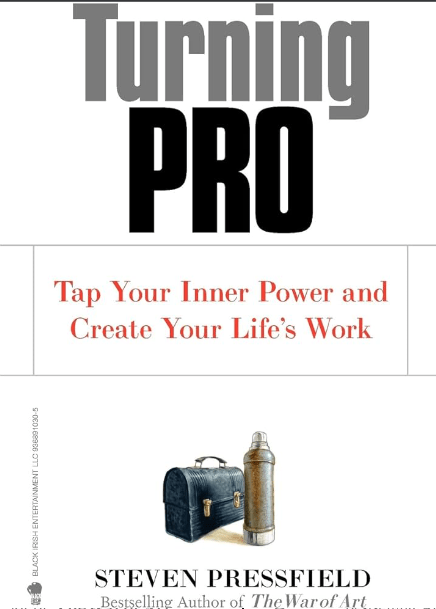
Steven Pressfield’s books get raved about a lot in creative communities. And I could see why. This was my first time reading one of his books, and I was not disappointed. In Turning Pro, he shares the hard-earned practical lessons that he learned on getting creative projects done. Because at some point, every one of us has been guilty of deferring our work to “someday” that never comes.
One of his points that I find most interesting is his concept of a “shadow calling”. As he put it, a shadow calling is a career that keeps us from doing the creative work that we really want to do. While it’s fine to work a job while juggling our creative projects, we must be careful on whether we’re using that job as a distraction or excuse from having to face our fears in doing creative work. It’s too easy to fall into this trap, and it’s likely why we may never get to see our creative projects come to life.
“On Great Men” by Thomas Carlyle
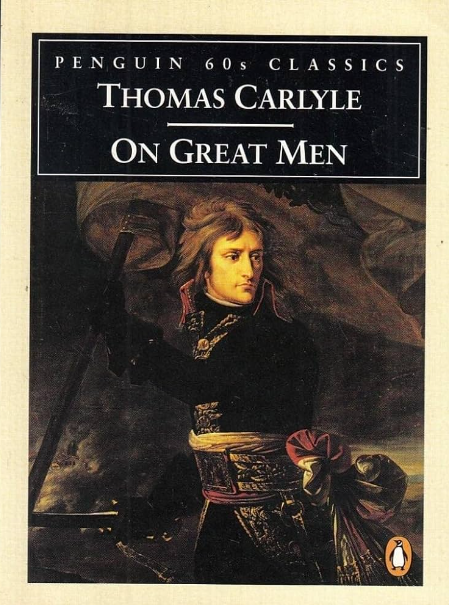
This was a pretty interesting discussion. According to the essayist Thomas Carlyle, the significant events in mankind can be attributed to the footprint of great individuals, particularly highly charismatic and influential leaders. He references historical figures such as Prophet Muhammad (pbuh) and Napoleon Bonaparte, arguing that such individuals were born with unique traits that made them great, that allowed them to be effective leaders and shape the world in the ways that they did.
Overall, I guess there’s some truth to this theory. One important thing to understand is that Carlyle wasn’t denying the role of the common folk or the social climate in shaping history. He was merely suggesting that the “great men” had the biggest factor in doing so. Reading this book reminded me of Ian Kershaw’s Hitler biography that I read a couple of months ago. While social factors certainly had their part, it’s hard to imagine the Third Reich happening without Hitler’s uniquely rousing influence on the German people.
“The Daily Laws” by Robert Greene

Robert Greene’s The Daily Laws is intended to be read a page a day, so that you could better reflect on the lessons from all of Robert’s prior books. For the purpose of re-reading, though, I just read it from cover-to-cover, like a normal book this time.
What I appreciate about this book is that it isn’t a copy-paste compilation of Robert’s other books. You could see that in any given page, the lessons are made more digestible and practical to everyday life. Another cool thing is that there are also some lessons shared from Robert’s upcoming book The Law of the Sublime.
But most of all, what truly makes this book special is that it’s the only one in Robert’s entire catalogue in which he actually talks about himself. This really adds a much-needed human side and personality behind his writings, making all the lessons much more relatable and understandable.
 Izzat Zailan
Leave a Comment