
Heavier than Heaven by Charles R. Cross
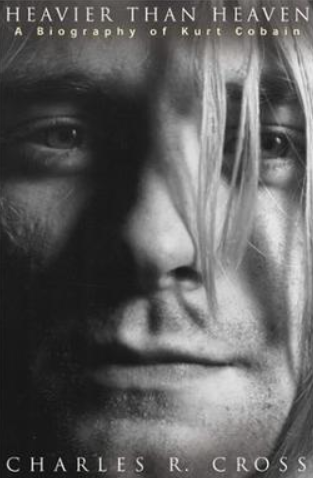
Not many books can make me tear up as much as this one did. Despite my love for Kurt Cobain’s music, I don’t think it was the reason why this book affected me so deeply. I read this not so much as a biography of “Kurt Cobain, the grunge icon”, but simply as one of a troubled soul.
It’s a loss-of-innocence story that I’m sure many of us can empathize, or at least, sympathize with. He was an average happy child whose world turned completely upside-down once his parents divorced, turning his pure love for them into bitter resentment, and haunting him with an endless inner struggle to make sense of the world around him. That was, until he ended himself.
Psycho-Cybernetics by Maxwell Maltz
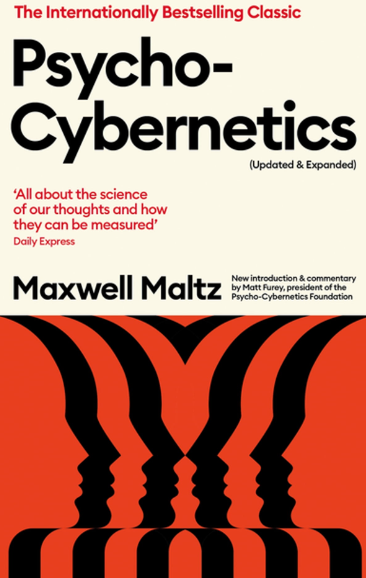
This is an interesting self-help book, in that it was written by a plastic surgeon. Throughout his practice, he observed that surgery didn’t merely improve his clients’ physical looks, but also their inner confidence and their success. They felt as if they were entirely different people, ready to take over the world.
But many of his other clients, however, still felt butt-ugly, no matter how physically-attractive they became after surgery. This led the author to dedicate himself to studying the psychology behind confidence and success. As he shares in this book, this largely has to do with our self-image. If we visualize ourselves as a failure, no amount of external success can make us feel like a successful person. Worse, we would unconsciously sabotage ourselves to keep up with our self-image of a failure.
Strangers on a Pier by Tash Aw
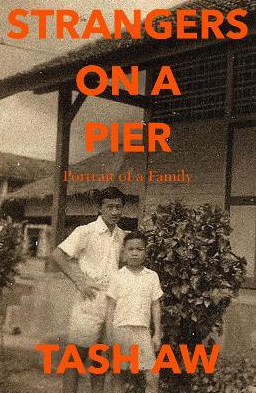
“The past is painful. The present is easy,” writes Tash Aw in this riveting memoir on his personal history. Reading this made me really think about what it means to be who we are — to be of a certain race, to carry a certain name, to live in a certain country. Think for a moment, who were our ancestors? What were their names, what did they look like, and where did they come from?
Like the majority of us, the author had no substantial answer to any of these questions. The past is a foreign land, forever lost from our sight, and its legacy forgotten and potentially misunderstood. Being largely disconnected from our past, we are left feeling like a stranger to ourselves.
I also found it interesting, how the author discusses the generation gap between himself and his elders, or the inevitable differences in their values and attitudes towards life. Being a Malaysian Chinese, the author’s grandparents migrated to Malaya in search of better opportunities, and were accustomed to hardships that the author’s generation could never imagine. He writes of his grandfather, “He was an immigrant. I was a grandchild of an immigrant. We would never see the world in the same way.”
I Want to Die but I Want to Eat Tteokbokki by Baek Sehee
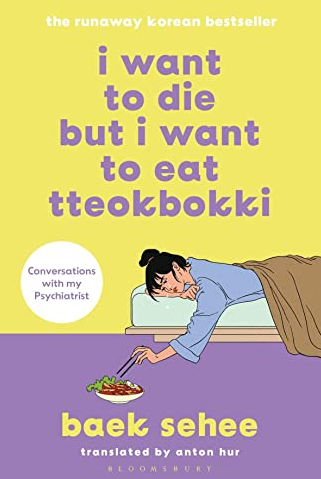
I first read this at around the same time I got out of therapy 2 years ago. One of the biggest takeaways I got from this book, as well as from my therapist, is that emotions can coexist. You can feel grief about one thing, and feel joy about another thing at the same time. And the thing is, you could wish to shut off the part of yourself that feels grief, but it would mean shutting off the part of yourself that feels joy, too.
Also, if you feel the need to be in therapy but are still on the fence about it, I encourage you try at least one session. Therapy isn’t just about talking about the past, even though it helps. It’s also about learning practical ways to better manage your condition.
I myself got into therapy after 3 years of intense depression. While I can’t say that I don’t ever get depressed now, I can say that I’m much better at dealing with it today, because of the lessons I’ve continuously practiced. For one thing, depression isn’t a daily struggle for me anymore. And whenever I do find myself in this state, it wouldn’t take more than a couple of days before I feel like myself again.
 Izzat Zailan
Leave a Comment