
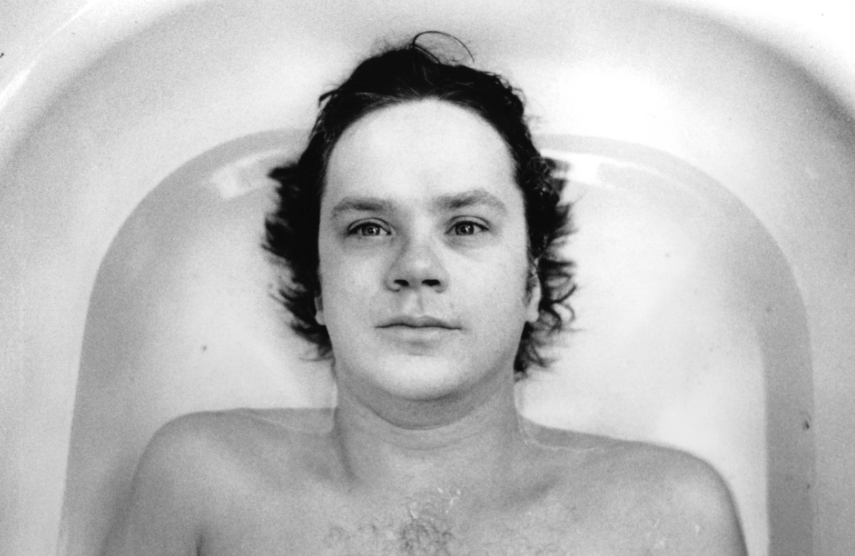
“If you’ve made your peace, then the devils are really angels, freeing you from the Earth.”
– Jacob’s Ladder
Sometime during his budding and struggling career as a screenwriter, Bruce Joel Rubin had a nightmare. He dreamed that he was in a deserted subway train, feeling lonely and afraid.
As he got off the train, he found, to his horror, that the nearest exit out of the station was locked. He grew only more fearful as he made his way to the other end of the station, where its exit, too, was locked.
His only hope to get himself out of there was to descend onto the tracks, and to make his way into the darkness of the tunnel.
Recalling the vivid nightmare, Rubin described, “I realize the only way out is down through the dark tunnel of the subway into some kind of awful hell. But I have to make that journey, because ultimately it’s the journey to my own liberation.”
More often than not, the dreams that we experience in our sleep are figments of our subconscious thoughts and feelings. Rubin interpreted his dream as being a representation of his present station in life: he was living in a cornfield in Illinois with no real job, with no friends, and his wife paying the bills. In his lowest moments, he felt that he didn’t have an important story to share.
But to him, the dream also had a message for him — that the only way out of his suffering was through.
Waking up from the dream, he had a renewed sense of vigor. He thought that the dream itself could make a good opening scene for a film. Writing “(his) way out of hell”, he worked tirelessly on a script titled Jacob’s Ladder.
***
In the decades since its release in 1990, Jacob’s Ladder has garnered critical acclaim as one of the greatest horror films ever made. Because, number one, it’s pretty damn scary. Its surreal ambience, and its depiction of faceless demonic apparitions are sheer nightmare fuel.
Watching the film makes you feel like you are in a horrible dream that you cannot wake from. It’s no surprise that the film has had the indelible impact that it has had, especially on the psychological horror subgenre.
But the film has also stood the test of time because of its spiritual themes, particularly on the nature of suffering.
The film tells the story of its namesake protagonist, Jacob Singer, a military veteran who struggles to make peace with his past. He is literally haunted by his memories of serving in the Vietnam War, as well as the tragic loss of his young son in a car accident prior to the war.
In every corner he turns, he experiences bizarre incidences, and sees terrifying demonic entities. As the film progresses, he becomes increasingly disoriented, not being able to tell what is real and what isn’t.
Even though the film doesn’t explicitly mention it, the present reality that Jacob exists in is a liminal realm between life and the afterlife. He isn’t quite alive, and neither is he dead yet. He is somewhere in between, as his spirit fights for its salvation, by attempting to reconcile with his painful memories.
With that, the title Jacob’s Ladder cleverly alludes to the Abrahamic belief in the ladder that the Prophet Jacob (peace be upon him) saw in his dream, which extended from Heaven to Earth, with angels ascending and descending upon it. This ladder is the liminal realm that Jacob Singer’s spirit finds itself in, as it transitions from the earthly to the divine.
***
Having been an ardent student of Tibetan Buddhism, Rubin’s idea for the liminal realm in Jacob’s Ladder was mostly inspired by the concept of the Bardo, where the consciousness of the deceased traverses through strange visions and experiences, which can either be pleasant or horrifying, based on their past deeds.
In the Bardo, the deceased has the opportunity to find enlightenment, as well as to free itself from samsara, or the endless cycle of life, death, and rebirth. It is in this state that the deceased may truly come to terms with the ephemeral nature of life in this world.
The film also references a philosophy by the Christian mystic, Meister Eckhart, in which the main message of the film can be neatly summarized.
As a character in the film tells Jacob, “Eckhart saw Hell too. He said: ‘The only thing that burns in Hell is the part of you that won’t let go of life, your memories, your attachments. They burn them all away. But they’re not punishing you,’ he said. ‘They’re freeing your soul. So, if you’re frightened of dying and you’re holding on, you’ll see devils tearing your life away. But if you’ve made your peace, then the devils are really angels, freeing you from the Earth.’”
Jacob’s Ladder may be quite a metaphysical film, as it deals with our spiritual and existential questions about life and the afterlife. But its lesson is something that we can take to heart and put into practice, right here and right now. The film teaches us that our suffering can be a blessing, if we let it be.
For Jacob in the film, his nightmare only ends once he is able to face the music — to especially accept that his son is gone. As Rubin remarked on Jacob’s liberation, “Rather than running away from the problem, it’s about embracing it. For Jacob, that moment comes with his son. He learns that it’s only though the biggest losses and the greatest pain and the most broken heart, that you discover your way to liberation.”
It can be the hardest thing to hear, that your suffering can be a blessing, especially when you’ve gone through so much in your life. But try, as best you can, to open your heart, even if just a little, to this possibility.
If we can make peace with whatever demons we may face — be it trauma, misfortune, tragedy, loss, or any form of adversity — by letting go of our need for control over the events in our life, and by accepting that whatever has happened, has happened, we can only be led towards better things.
At the very least, “it builds our character,” as one of my closest friends would often say whenever either of us are venting out about a tough time that we’re facing.
No matter what your situation may be, or how hopeless it might seem, you can count on one thing for certain, and that is, you’ve learned something of value, and you have grown stronger in some way.
Other than that, our suffering can be the very thing that reminds us of life’s imperfection and impermanence. There will always be suffering in this life. And this life is nothing but a brief moment in time, as compared to the boundless and everlasting afterlife. So, we might remember to be careful in not attaching ourselves too much to what is inherently flawed and temporary.
As you face your “demons”, consider for a moment, can they actually be “angels” that are freeing you, and are guiding you towards better things?
And on a final note, you need to give Jacob’s Ladder a watch. This article doesn’t do the film justice. You might either crap your pants or have a moment of enlightenment. Or even both. Anyhow, it’s going to be different than any other horror film you’ve seen.
 Izzat Zailan
Leave a Comment