
“The Psychology of Money” by Morgan Housel

This book definitely deserves all the hype. It wouldn’t be a stretch to say that it’s one of the most important books we have on personal finance. Unlike other books of its genre, it doesn’t actually offer much technical advice, like budgets, or what kinds of investments you should be getting into. Instead, it’s exclusively dedicated to helping you understand your own human nature, and how it drives you to make (mostly bad) financial decisions. In many ways, this isn’t just a book about money, but life.
One of many things I appreciate about this book is that it acknowledges the gray areas in financial management. For instance, there is no one-size-fits-all solution with money. What works for some people might not work for others. Also, we cannot underestimate the role of luck or fate in our lives. Some of us are just blessed with better opportunities than others. Much about money and life come down to playing the cards that we’re dealt to the best of our own ability.
“Made to Stick” by Chip and Dan Heath
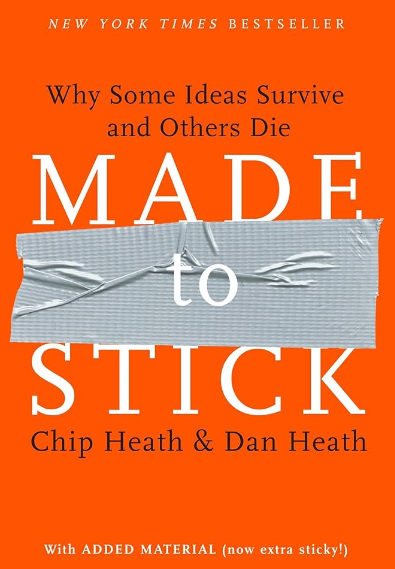
In this book, the Heath brothers discuss why certain ideas resonate deeply with audiences and even become lasting cultural phenomena, while other ideas are duds or at best become short-lived trends. As with the brothers’ other books, this one provides a framework for not only generating sticky ideas, but also communicating them effectively.
This book, in itself, is very sticky, and there are way too many great insights for me to share here. But at the heart of this book is an interesting paradox. Intuitively, you might think having a framework or structure limits your creativity. But without constraints to guide our creative process, it’s not very likely that we can come up with solid and coherent ideas. As the Heath brothers found, great ideas have more similarities than we think, while bad ideas tend to be uniquely bad in their own ways. I like that the brothers quote Tolstoy in their explanation, “All happy families are alike; each unhappy family is unhappy in its own way.”
“The Myth of the Garage” by Chip and Dan Heath
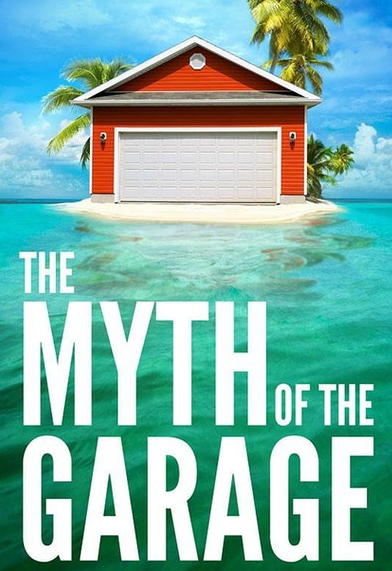
Reading this made me sad, in a way. Because with this, I’ve read every book that the Heath brothers had co-written together. I’ve thoroughly enjoyed reading their work, which seamlessly fuses practicality and humor. This e-book is a great read as well. It is a collection of the best columns that the brothers wrote for Fast Company magazine from 2007 to 2011.
The titular article, The Myth of the Garage, is one of my favorites. It challenges our romanticization of the lone entrepreneur, who builds a game-changing company from nothing, in their humble home garage. I guess we all love a good rags-to-riches story, not unlike how we romanticize the idea of a “self-made man”. But the truth is, no one ever succeeds alone. Our success depends on many external factors, not least the help of others. The Heath brothers particularly point out the importance for entrepreneurs to have prior work experience. As they share, Steve Jobs credited his time working at Atari for providing him with the skills he needed to start Apple in his garage.
You can download this e-book for free on the Heath brothers’ website.
“The Tibetan Book of the Dead” (Translated by Robert Thurman)
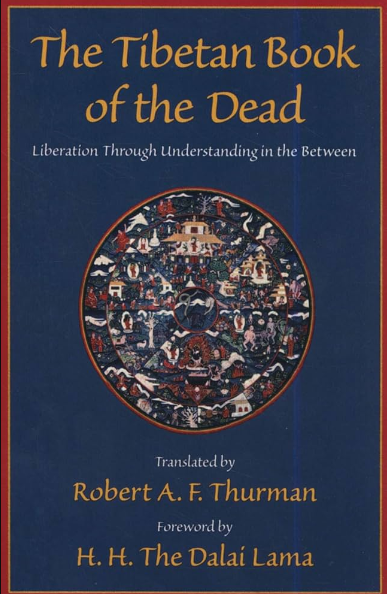
Picked this one up after seeing the horror film Jacob’s Ladder. According to Tibetan Buddhist belief, a deceased person would have to experience the “Bardo”, a liminal state between death and rebirth. The Bardo Thodol, or The Tibetan Book of the Dead, serves as a guide on how the deceased can navigate their way through this state.
Of course, for myself, much of the content in this book is quite abstract, as it touches a lot on what one might encounter in the Bardo, like Buddhist deities. Nevertheless, it was fun to learn in deeper detail about this concept, as well as the culture as a whole. The translator’s commentary is especially helpful, though I personally find it a bit odd in terms of how he attempts to make this book universally practicable for people of different faiths.
 Izzat Zailan
Leave a Comment