
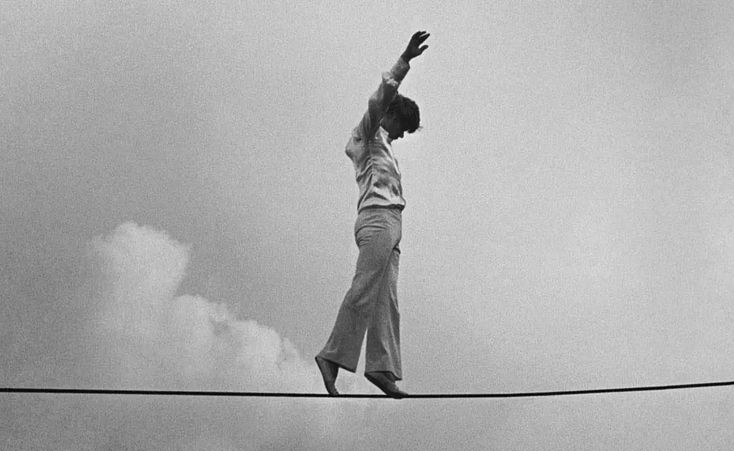
“The world is a narrow bridge, but the important thing is to not be afraid.”
— Hebrew proverb
One half of The Godfather Part II serves as a prequel, as it narrates the rise of Don Vito Corleone. (With the other half picking up where the first film left off, narrating the downfall of Vito’s son, Michael.)
We witness Vito’s humble, tragic beginnings — losing his family to a local Mafia Don in his hometown of Sicily following his father’s refusal to pay tribute, then escaping to New York City and growing up alone.
As a young man, he makes an honest living by working at a grocery store to fend for his wife and their baby son. But eventually, another Mafia Don local to the area, named Don Fanucci, extorts the store owner for a job placement for Fanucci’s relative, and Vito is forced to let go of his livelihood.
Vito starts turning to crime for a living, by stealing and reselling rugs and clothing. But once again, he encounters Don Fanucci, who demands that he give away most of his revenue as tribute.
Just like everybody else in the neighborhood, Vito’s business partners think it is a no-brainer to pay the tribute. Everybody is afraid of Don Fanucci. Tributes must be paid, or there would be serious consequences. Vito should know best — he saw his own family die after they refused to pay up.
Yet, Vito begs to differ. Having gone through the traumatic experiences that he had, he learned to see people as they are, and not as they appear.
Vito knows that Don Fanucci is all bark and no bite. He notices that aside from the nice suits that he wears and his blackmailing, Don Fanucci doesn’t act like an actual Don. He has no bodyguards to watch his back. He has no goons to send to do his dirty work. Not least, he lives in the same shithole apartment like everyone else in the neighborhood, where anybody could easily sneak in and kill him. So, that’s exactly what Vito does.
Vito’s assessment of Don Fanucci is right. After Fanucci’s death, there are no consequences. There are no gangs that run after him to avenge Fanucci. It’s like he never even existed.
And as the icing on the cake, Vito builds his power, earning a reputation in his neighborhood as the local Mafia Don who is loved, not feared — who defends the oppressed, rather than stepping on them.
Anyway, the reason I’m sharing this story is that in many situations that we face, we tend to perceive them as much worse than they actually are.
What’s more, the key to dismantling our fears is usually right in front of us. It should take simple logic, and an unbiased observation, for us to prove to ourselves that our fears are unfounded.
Still, it isn’t so easy to overcome our fears. Because as it so often happens, we tend to be afraid of something just because everyone else is afraid. As Incubus describes in their song Drive, fear has a “vague, haunting mass appeal.”
How do we do it, then? How do we truly become fearless?
The thing is, we don’t.
It’s not about having fear, because fear will always be a part of our being. It’s about choosing to fear less. It’s when we feel the fear, and we go about doing whatever we have to do anyway.
I know, I’m giving you very boring advice. “The way to overcome our fears is to overcome them.” — well, duh, asshole.
But it’s true. As with most things in life, overcoming our fears is simple, but difficult. At some point, you just have to stop intellectualizing your fears and start actually doing something about them. You have to be one in control of your own steering wheel.
“It’s driven me before, and it seems to be the way that everyone else gets around. But lately, I’m beginning to find that when I drive myself, my light is found.”
— Incubus,
Drive
 Izzat Zailan
Leave a Comment