
“Right Thing, Right Now” by Ryan Holiday

Honestly, I’ve fallen out of love with Ryan’s books for quite a while now. It’s like an MCU scenario — I used to eagerly anticipate each book every year. But over time, I got tired of the same-ish content, especially around Stoicism. I’d say Conspiracy (which isn’t about Stoicism), published in 2018, was his Endgame.
Turning an ancient philosophy into a brand or a business — and publishing every year — can be a smart strategy, but it does get boring. The Obstacle is the Way and Ego is the Enemy totally changed my life. But the succeeding Stoicism books — especially his recent Stoic Virtues series — sadly fall short. They’re still good books. But they’re just not great. In tone, they sound tired and mechanical. They failed my personal litmus test, in that I couldn’t remember a single story or line from those books.
Ryan’s new book, Right Here, Right Now is the third in the Stoic Virtues series. I still wouldn’t say it’s great, but it is a slight improvement from the previous entries in the series. Because, if I’m not mistaken, he had more time to work on it after delaying its publication by a year. Overall, a few of the stories are a little more memorable, but the monotonic prose can particularly be improved on.
“Walking Disaster” by Deryck Whibley

I had been waiting for this one for a long, long time. I had been in a reader’s block recently, and this was the perfect book to beat myself out of it. I was so immersed in it, that I read it from cover to cover in just one Saturday.
You probably wouldn’t be as interested to read this book if you weren’t into Sum 41’s music. But as someone who has loved the band since my childhood days, it’s one of the best books I’ve read this year.
My heart goes out to Deryck, the lead singer and songwriter of Sum 41, and author of this memoir. I had some idea of the troubles he had went through, but I never knew it was this bad. He candidly shares about growing up without a father and not knowing who he is to this day, his long struggle with alcoholism, the sexual abuse he experienced by Sum 41’s former manager, the ugly band politics — and why he decided to break the band up, despite now being in their prime, comeback era.
This book definitely made me appreciate Sum 41’s music much more than I already had.
“Century of Song” by Noah LeFevre

Noah LeFevre is the creator behind the music analysis YouTube channel Polyphonic (which, if you haven’t seen, you’re really missing out).
In this debut book, he does something interesting, where he tells the history of the United States from a musical perspective. Starting from the 1920s and ending with the 2020s, he discusses 101 songs that, in his opinion, best represents the year in which they were released.
I’d argue that, even though this book is essentially about music, it can serve just as well as a history reference in itself — because in every great social change, there was music.
On a side note, because of the structure of this book, it can be overwhelming to read in one sitting. I personally enjoyed reading a few pages at a time, while I was also in the middle of another book.
“Lincoln’s Melancholy” by Abraham Lincoln
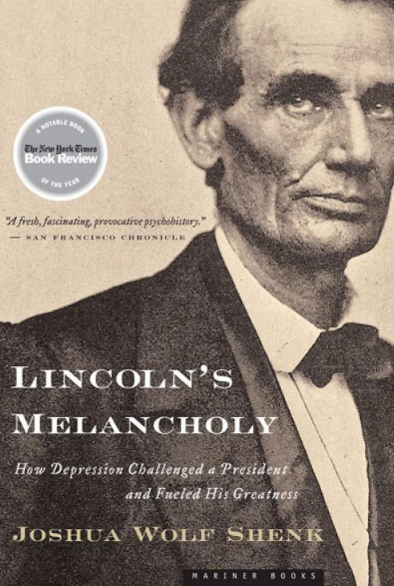
I’ve talked about this book more than a few times. But it’s still one of my all-time favorite books, after first reading it 4 years ago.
One of the hardest things about depression is how I don’t fully understand it myself, despite having struggled with it for a long time. It feels like there’s no real way to run away from it. Just when you think you’ve gotten better, it comes back to you, more intensely than it did before.
It can be comforting to read about people with similar struggles, one of them being Abraham Lincoln. He set out to be the great leader that he did not in spite of depression, but because of it. He learned to use his struggles to empathize with others on a deeper level, and to also find his life’s mission that was worth dying for. For him, it was the nearly impossible task of ending slavery, for which he ultimately did pay with his life.
 Izzat Zailan
Leave a Comment