
“There’s no justice in the world, and there never was.”
— Muse,
Soldier’s Poem
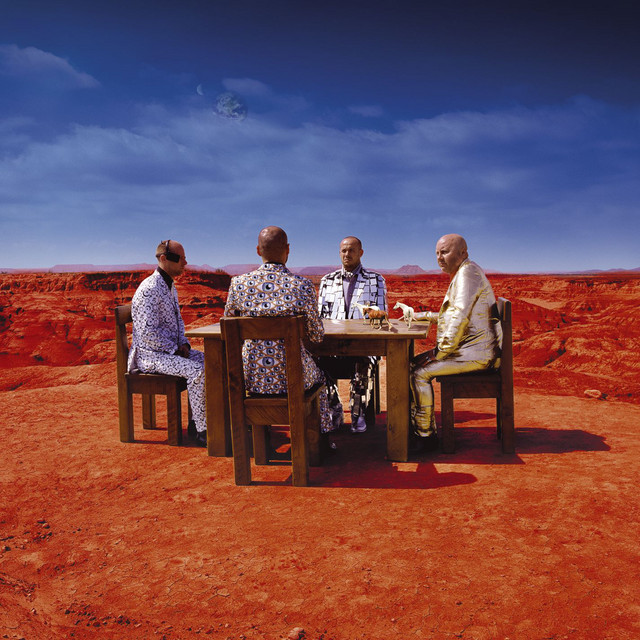
I dare say that Soldier’s Poem, from Muse’s album Black Holes and Revelations, stands out as one of the greatest works of anti-war art. Despite it not being a famous song in Muse’s discography, it is inarguably their tour de force.
Clocking in at just a little over two minutes, the song is remarkable for its simplicity. There is no elaborate production here — no soaring guitar solos, no pounding drums. Instead, there is only a soft acoustic guitar and tender, unguarded harmonies, creating a sound that feels hauntingly intimate.
Musically inspired by Elvis Presley’s Can’t Help Falling in Love, it sounds almost like a whispered confession, as it expresses lifetimes of otherwise unsaid truths about war. This simplicity heightens the song’s emotional weight, leaving listeners to confront its raw, unvarnished message.
As the title suggests, Soldier’s Poem is sung from the perspective of a soldier who feels disillusioned about the war he is fighting. As we reside in his troubled mind during these two minutes, we are faced with the searingly difficult questions that are eating away at his heart and soul.
We hear his thoughts that are perhaps addressed to the politicians who sent him to war, or even the common folk who have no inkling of what it is truly like to trudge in his boots.
As we hear in the first verse, he particularly struggles with one question directed at his people, and that is, “Do you think you deserve your freedom?” Interestingly, he immediately segues into the next verse, while the background vocals audibly sing, “No. No. No. No. No. No.”
No matter how much he tries to ignore this question, it continues to linger and fester in him.
In the second verse, we hear his anger. “How could you send us so far away from home,” he asks. “When you know damn well that is wrong?” Yet, in spite of his anger and confusion, he would still willingly die for his people.
Again, the question surfaces — “Do you think you deserve your freedom?” Only this time, he couldn’t hold it back anymore. And he is the one who answers, resoundingly, “No, I don’t think you do.”
“There’s no justice in the world,” he continues to sing. “And there never was.”
Personally, I think the reason why Soldier’s Poem touched me so deeply is that it reveals the profoundly human side of those who are sent to fight wars. It reminds us that the soldiers on the front lines may not even share the lofty ideals or narratives spewed out by the politicians who send them into battle. Instead, they often find themselves caught in the middle, trying to make sense of the chaos around them.
This song reminds me a lot of the writings of historian Shelby Foote, who often highlighted the humanity of soldiers in his work. In his reflections on the American Civil War, Foote described how ordinary men — many of whom had no say in the grand political narratives of the time — were thrust into nightmarish circumstances in war.
Foote insisted that while the official narrative of the Civil War is that it was fought to end slavery, “No soldier on either side gave a damn about the slaves — they were fighting for other reasons entirely in their minds.”
As he explained, “You have to understand that the raggedy Confederate soldier who owned no slaves and probably couldn’t even read the Constitution, let alone understand it, when he was captured by Union soldiers and asked, ‘What are you fighting for?’ replied, ‘I’m fighting because you’re down here.’”
These men were individuals, not symbols, struggling to navigate their own beliefs and moral dilemmas amidst all the turmoil. Much like the soldier in Muse’s song, these men found themselves questioning the justice of their cause, even as they fulfilled their duties.
While the rhetoric of war often revolves around absolutes — good versus evil, freedom versus oppression — the lived experience of those who fight is far more ambiguous.
With that, we’re challenged to reflect on the burden placed on individuals who must carry out decisions made by those in power — decisions they may not even fully understand or agree with. The soldier in the song is not a faceless figure; he is all too human, with real fears and doubts, just like the rest of us.
By stripping away the grandiosity often associated with discussions of war, Muse invites us to connect with the raw humanity of the soldier’s perspective.
And in doing so, Soldier’s Poem becomes more than just a song. It becomes a poignant reminder of the complexities of war, in that its cost is largely borne by those who are often given little choice in the matter.
 Izzat Zailan
Leave a Comment