“I find music, at an instrumental level, totally absorbing. It’s something that takes me outside of the ordinary. I close my eyes and I am transported.”
— Matt Bellamy
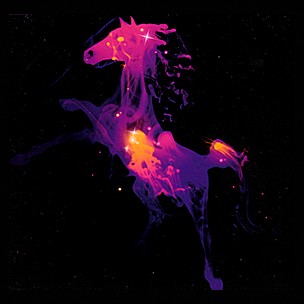
One of my favorite songs to listen to nowadays is Muse’s Knights of Cydonia. I’d bet that this song is unlike anything you’ve heard before. It’s a Spaghetti Western epic — set in Mars.
Punctuated by thunderous, galloping rhythms and the whine of futuristic laser fire, the song conjures a cinematic showdown where heroic gunslingers rise against the tyranny of corrupt Martian overlords.
As the song reaches its climactic finale, the narrator’s defiant cry, “No one’s gonna take me alive,” rings out like a last stand against all odds — a fearless warrior’s vow to fight to the very end, refusing to bow to the forces of oppression.
What amazes me isn’t only how good the song is, but how playful it is. It gets me thinking about how fun and relaxed an attitude the writers must have towards their music, that they would be able to craft a song of such daring originality.
True enough, this is exactly what I discovered when I pored over Muse’s interviews.
Hearing them share their thought processes behind their music, you couldn’t help but notice their sense of childlike excitement. They don’t take their work too seriously. Rather, they play and have fun, allowing them to breathe more of their personality into their music, and to freely explore unique soundscapes and science fiction themes.
As primary songwriter Matt Bellamy remarked, “There’s definitely an Englishness to what we do, playing with eccentric ideas. Sometimes, even I step back and go: ‘That’s a bit silly, isn’t it?’ Maybe calling a song Knights of Cydonia is, in itself, acknowledging that this is a bit funny, particularly when we are pushing the epic side of the band to almost comical levels.
“Bands tend to take themselves very seriously, but we often turn into a bunch of giggling schoolboys when we’re together, because we were giggling schoolboys when we started. I think the giggle factor is quite healthy. Both on stage and in the studio, there’s an element of not really giving a damn. There’s a lot of freedom in being able to laugh at yourself.”
Having fun in our work isn’t an uncommon piece of advice for being more creative. You’ve likely figured this out at some point in your life.
But the plain reality is that when it comes to actually putting this advice into practice, it might not be as simple as it seems. We might encounter the pressures of putting out content on a regular cadence, and our once beaming outlet of creativity might sour into an uninspired cubicle of stale, mechanical ideas. We might especially get ensnared into the mindset of playing it safe, of only wanting to create content that we already know resonates well with our audience.
So, the question is, what are the practical steps we can take, so that we can actually be more playful in our work?
First things first, we need to be clear about our intentions. What I mean is that we always need to be mindful of why we’re creating our art. And it’s not because of wanting to please anybody or just for sake of keeping to a consistent publishing schedule.
It’s because we simply want to do it, for its own sake, and because we love it. And this allows us to do what artists are meant to do — to think alternative thoughts — thoughts that transcend conventional norms and perspectives.
Matt put it this way, “I’m fascinated by alternative thinking. Reality is formed for us by the system we live in, by the way information gets to us, and people who question that are always regarded as a little bit mad. But I think one of the freedoms that music has given me is freedom of thought. If you are in a nine-to-five situation and you’re in debt to the bank, as most people are, it can be difficult to entertain alternative thoughts. You have to behave in a certain way and perform certain duties to society. My aim in this band is to try to escape that.”
Once we have our intentions down, the next step to take is to let our imagination run wild — to daydream and experiment with novel ideas, without any restriction or limitation in place — except that it only has to excite us.
With Knights of Cydonia, Muse went into their creative process with an open, unbridled mind. The idea for the song was born on a tour bus rolling through the vast, sun-scorched landscapes of Arizona. As the desert stretched endlessly beyond the window, Matt began noodling on his guitar — the echoes of his riff blending seamlessly with the rhythmic hum of the road.
Something about the scene — the infinite horizon, the golden dust swirling in the distance — triggered a vision of galloping horses, blaring trumpets, and an epic showdown under a burning sky.
Matt relentlessly chased down this vision, eagerly working to bring it to life by tinkering with disparate elements from various genres. For one thing, he devoured Spaghetti Western films, intentionally emulating the sound effects and the tunes that constituted the essence of such films. Alongside this, he listened to surf rock music, such as Dick Dale’s, whose influence is apparent in the fast-picking guitar-playing style in Knights of Cydonia.
Perhaps the most prominent source of inspiration was one that was closest to home. Matt deliberately sought to pay homage to his father’s band, The Tornados, particularly their hit Telstar, which was one of the first songs to not only capture a space-age feel, but to also do it in a way that naturally blends with the twanginess of surf-rock. It’s impossible to unhear just how much of Telstar is in Knights of Cydonia.
Not only that, Matt didn’t merely daydream about the futuristic Western world of Knights of Cydonia. He lived in it, and he actively prompted himself to write as if he were in the characters’ shoes.
As he remarked, “When I’ve created a slightly imaginary dystopian nightmare, I’m putting myself in there: what would I feel in that situation? In Knights Of Cydonia — ‘No one’s going to take me alive,’ — I had that feeling of wanting to fight back against something.”
In the end, Knights of Cydonia stands as a hallmark example of what happens when artists create with a playful mindset, and a fearless curiosity.
Muse didn’t just write a song. They stitched together an entire world, a spectacle, a genre-defying anthem that gallops across the cosmos. And they did it with a giggle, and a whole lot of trust in their imagination.
That’s what Knights of Cydonia teaches you about creating good art — chase the ideas that make you laugh and don’t take yourself too seriously. Have fun with the process, and see where your art takes you.
 Izzat Zailan
Leave a Comment