
“Out of this World: The Story of Muse” by Mark Beaumont

Muse has been my favorite band in the past few months. Their unique blend of rock and classical music — and science fiction — makes for an imaginative, and addictive experience. Being so addicted, I just had to learn all I could about the band and their music.
There’s a lot of great information in this book, particularly regarding singer and songwriter Matt Bellamy’s thought processes behind Muse’s music. But what could be better is its delivery. The book lacks a storytelling element, and much of it feels rather monotonous. This becomes more glaring towards the end, where the book kind of abruptly finishes without proper closure.
“Parallel Worlds” by Michio Kaku
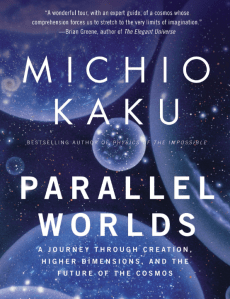
Multiverses — or the idea that our universe might be just one of countless others, each with their own rules, histories, and possibilities — is a tired trope in superhero movies nowadays. But this concept has long fascinated humanity, even dating back to ancient Greek philosophers and gaining serious traction in modern physics through quantum mechanics and cosmology.
Published about 20 years ago, Michio Kaku’s fascinating book Parallel Worlds explains how the existence of multiverses might be seriously possible. One warning, though — he has a penchant for going off on tangents and diving into concepts that aren’t closely related to his main argument. However, I personally didn’t mind. Knowing very little about quantum physics and cosmology, I enjoyed reading about the extra background he provided. His enthusiasm made even the detours feel like part of a much bigger, exciting picture.
“Why Dylan Matters” by Richard F. Thomas

I have a weakness for books on Bob Dylan. But for a long while, I avoided picking this one up. My preconception was that this book would be too academic, or that it would be reading too much into Dylan’s work and finding connections that aren’t actually there. When I knew that the author is a Harvard classics professor who teaches a class on Bob Dylan, and who connects his work to ancient Roman and Greek literature — I immediately went, nah.
Well, as you can see, I managed to challenge my own preconceptions. Quite surprisingly, I find the connections he makes are actually convincing. You can see how Dylan heavily borrows from ancient poets like Ovid and Virgil. If you were to do a side-by-side comparison (as the book does), you would notice how his lyrics closely mirror their poems.
The book isn’t as academic as I had expected either. Rather, it’s a breezy read, and you don’t feel like you’re getting a boring lecture. You feel like you’re having a casual conversation with a fellow Dylan fan, who’s nerding his heart out about how Dylan’s music has changed his life.
“The Obstacle is the Way: Expanded 10th Anniversary Edition” by Ryan Holiday
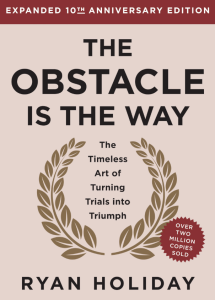
I’m not really that into Ryan Holiday’s books nowadays, but I still do have a very soft spot for his earlier ones. The Obstacle is the Way stands as one of the most impactful books I’ve ever read — and I’ve read it many times since I picked it up 8 or 9 years ago.
Last year, Ryan released a 10th anniversary edition. From my reading, I did notice how his understanding of Stoicism has definitely matured. He more deliberately ties the content back to “living a good life” as per the Stoic morals — as compared to somewhat materialistic ends emphasized in the original edition, like merely winning championships or achieving business success.
He’s also more sensitive and empathic in how he tells people that there’s good to be found in their pain and suffering. And of course, the additional research that he has put in makes for a more enjoyable read, too.
All in all, though, I personally still prefer the original edition. As with his other earlier work, there’s a sense of intimacy and no-nonsense-ness that made the original so impressionable. You’d feel like he was there to teach you about life — like the words were personally written for you, to comfort you, and to also kick you in the ass and give you tough love when you needed it.
Meanwhile, this new edition, to me, feels more like a philosophy book than a life-advice book. It’s more overtly about Stoicism: he name-drops Stoicism more often, and gives more in-depth explanations about the philosophy. Whereas in the original edition, he was subtle in framing Stoic concepts as practical solutions to people’s problems, without calling too much attention to their philosophical roots.
 Izzat Zailan
Leave a Comment