
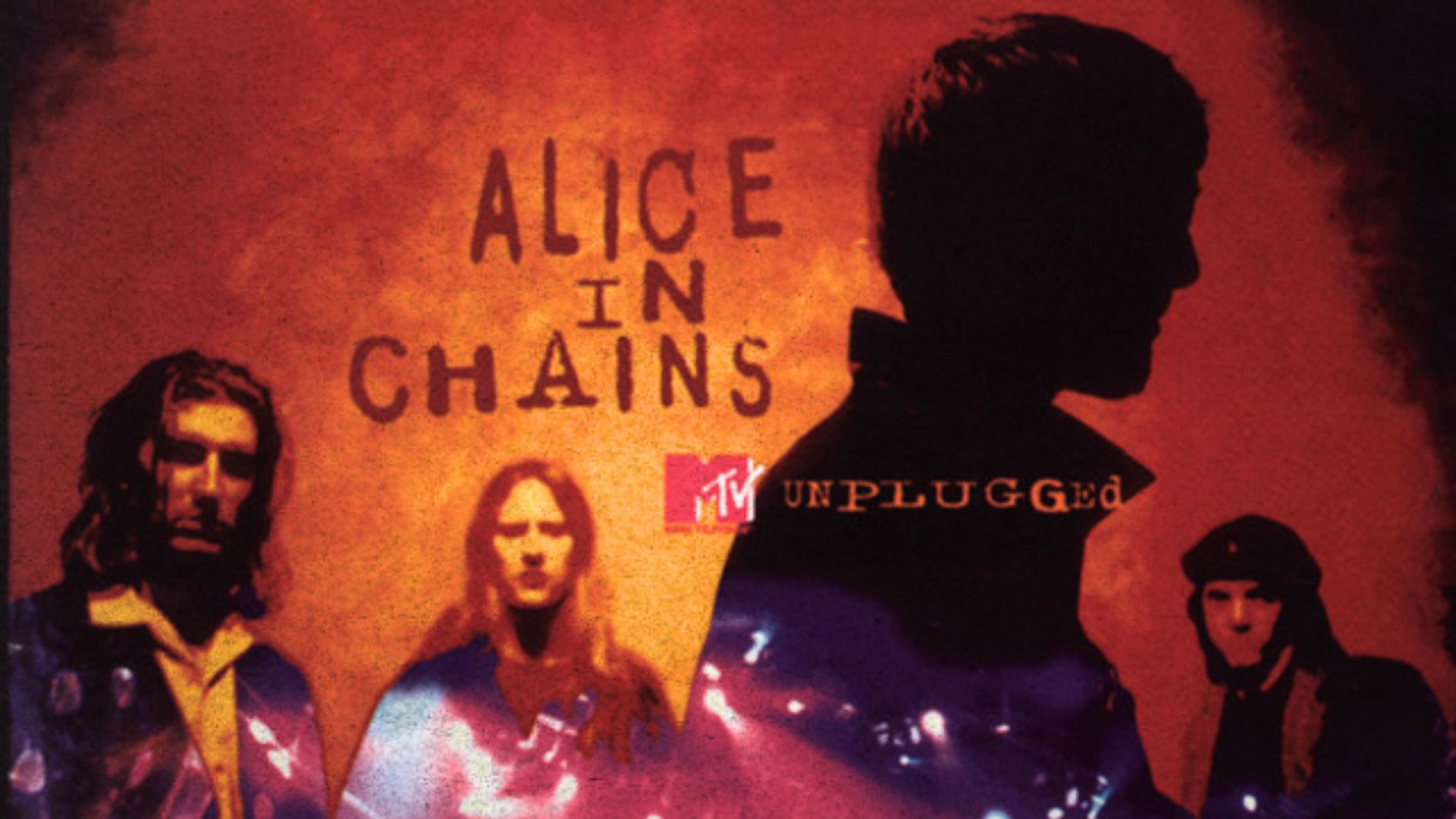
“You, my friend, I will defend. And if we change, well I’ll love you anyway.“
— Alice in Chains, “No Excuses”
Note
Let me start off by saying that it’s never easy to write about depression, and it will always be an uncomfortable subject matter for me to address.
Partly, it’s because depression might manifest itself differently in different people, and with that, I worry that I’d unintentionally reinforce any existing stigmas or misconceptions. And on an individual level, I also worry that I’m making myself too vulnerable by opening up about a struggle that is so private and personal.
But the fact of the matter is, as someone diagnosed with Persistent Depressive Disorder (PDD) with anxious distress, depression is a reality that I experience every day.
Whether or not I like it, and no matter what anyone might think, it is a large, undeniable part of my daily life. And by writing about it as honestly as I can, I hope that I could foster at least a little more understanding about depression. As I’ve often said, it’s not so much mental health awareness that we so desperately need, but mental health understanding.
Throughout this article, I sometimes refer specifically to PDD when describing aspects of depression that I experience as part of the condition, while at other times I use “depression” more broadly when referring to depressive experiences that are not necessarily unique to PDD.
I also want to emphasise that this article doesn’t intend to romanticise depression in any way. There’s nothing cool about depression. It’s a black hole that swallows you whole. It’s exhausting, isolating, and at its worst, incredibly destructive. Living with it over a prolonged period takes a toll in ways that are difficult to explain to someone who has never experienced it, or at least not with the same persistence or intensity.
So, as the author of this article, my only request is that it be read for what it is — just one person’s attempt to make sense of living with depression, through a personal commentary on a hauntingly beautiful record by the iconic grunge band Alice in Chains.
Swansong

“We were coming apart at the seams,” said Alice in Chains’ primary songwriter and guitarist Jerry Cantrell, as he reflected on the state of the band.
By the mid-1990s, the band was at the peak of their commercial success. They were perhaps the black sheep of the Seattle grunge scene. Whereas it was more common for their peers, most notably Nirvana, to tap into punk roots, Alice in Chains pioneered a blue ocean by basing much of their distinctive sound on heavy metal, with a subtle undercurrent of blues.
Often characterised as dark and brooding, their music is punctuated by loud distorted guitars, pounding rhythms, and soaring vocals, while covering intense subject matters like isolation, trauma, mortality, and addiction.
Singer Layne Staley’s voice was a defining element of the band — mercurial and anguished, yet strangely alluring — like a mad angel cutting through their dense, punishing wall of sound.
In 1994, their release Jar of Flies made music history as the first EP to chart at No. 1 on the US Billboard 200. Yet, despite all their success, the band was close to imploding. By and large, it had to do with Layne’s worsening depression and heroin addiction.
Layne had reached a place where he was barely functioning interpersonally, let alone professionally. This difficult period was marked by a wave of cancelled shows and missed appearances, strained recording sessions and long stretches of inactivity.
“If we had kept going,” drummer Sean Kinney remarked in an interview, “there was a good chance we would have self-destructed on the road, and we definitely didn’t want that to happen in public.” In the heat of the moment, Sean threw his drumsticks down and vowed never to work with Layne again.
By the time the band appeared on MTV Unplugged in April 1996, it had been almost three years since they had performed onstage.
The band had repeatedly turned down offers to play the show, but MTV producer Alex Colletti never stopped convincing them. “They have the songs, they have the depth, they have the emotion where, when you strip it down, you really find something there,” he said. “Layne’s voice and those songs were going to shine through.”
But even then, it was a miracle that Unplugged happened at all.
The band was in no ready state to honour their commitment. Layne was still deep in addiction. And there were scarcely any rehearsals, due to members not showing up. The months, weeks, and days leading up to the show were a nail-biting experience for everyone involved.
Come showtime, just when it couldn’t get any worse, Jerry was down with severe food poisoning. He had been vomiting before the show, and a rubbish bin was placed by his seat onstage as a precaution.
Every circumstance seemed to point to the show being doomed to fail. But as it happened, the band would somehow manage to pull it off. “When the light went green, and the cameras went on, and we started playing, I got a little adrenaline rush,” said Jerry. “So that turned out to be one of the greatest shows we’ve ever played.”
Seated on the side of the stage, Jerry kicked off the show with the opening chords to their song “Nutshell”, as his fellow band members walked in, one after another: bassist Mike Inez, guest guitarist Scotty Olson, drummer Sean Kinney — and lastly, singer Layne Staley, for whom the audience applauded the loudest.
Hiding behind dark sunglasses and long sleeves, and appearing gaunt and frail, Layne seemed like a shell of his former charismatic self. But when he sang, he sang so beautifully, that some in the audience were reportedly moved to tears.
Watching the videos, it’s endearing to notice the way Jerry looks at Layne throughout the show, how he’s always making sure that Layne is holding up alright.
At times, Jerry seems to beam with pride, as if in awe that his friend still has it in him, that despite everything he’s going through, he is still pulling off a transcendent performance.
But at other moments, Jerry’s gaze seems to be laced with grief. One can only imagine what it must have been like to look across the stage and see a dear friend in the state that he was in — the same friend who had once graciously given him a place to stay when he was homeless and had nowhere else to go; the same friend who had invited him to spend Christmas with his family, as if they were his own, after his mother and grandmother passed away.
“We chase misprinted lies…We chase the path of time..,” Layne crooned in the opening line of “Nutshell”. From that moment on, it seemed that he wasn’t merely singing the lyrics, but laying himself bare, as he confessed his deepest inner struggles, and poured into every word what little of himself still remained.
With that, there is such a haunting sense of finality to Layne’s performance. The songs — some of which were originally written about unrelated contexts — took on a marked degree of urgency and vulnerability, in what would be one of Layne’s last public appearances.
As the performance is often described, it’s like witnessing a man sing at his own funeral.
October

October is the worst month.
I’ve lived with depression for as long as I could remember. It began in childhood, though it started to significantly worsen in my early 20s. For me, PDD often feels like I’m running on empty and in overdrive at the same time.
On an average day, I experience persistent fatigue and exhaustion, alongside brain fog and emotional numbness, which leave me feeling disconnected from myself and my surroundings, as though I’m not fully present in my own body and everything around me feels dreamlike.
At the same time, my mind never seems to switch off. My worries keep spinning like a carousel, yet I can hardly seem to grasp any one thought long enough to make sense of it.
I guess that’s the weird oxymoronic thing about my depression that I still struggle to understand — how my mind can feel frustratingly sluggish, yet unbearably busy at the same time.
I don’t mean to sell myself short or kick myself in the teeth, but I find it difficult to handle things that require me to process information quickly, which means I’m hopelessly bad at IQ tests, for one. (So yes, recruitment processes are my idea of hell.)
And except when I’m driving, I’m terrible at sensing traffic and space. I can be a bit of a baby when it comes to crossing roads, and it has become a running joke with my friends at work, where they’d have to pull me back by the arm before crossing and tell me, “Saved you.”
Unless I take careful notes, I also tend to go through the distressing experience of getting lost in parking lots, because I genuinely couldn’t at all remember where I parked my car. I’d end up wandering around for what feels like forever, sweating like crazy and growing increasingly panicked as I search row after row with no sense of where I am. And afterwards, I’d feel bad that something so simple could be such a headache for me.
And despite my love for travelling, it can be extremely overstimulating, with the noise, movement, unfamiliar surroundings and constant stream of information often overwhelming me enough to pull me into a low.
Still, on most days, I usually manage to push myself to go to work, to socialise, and to do the things I love.
But there are periods or seasons where my depression becomes considerably more severe, and I could barely function at all. I’d barely have the energy to do the simplest things, like eating and taking a shower. All I feel capable of doing is just laying under the covers in bed, simply existing, and cutting myself off from everyone and everything.
October is such a season. I’ve come to anticipate it as the time of the year when depression would hit me the hardest. I’d feel a looming, burdensome sense of dread in my body, even a couple of months beforehand.
But this time around, I could tell that it would be much heavier than the previous years, with far more weighing on me that I had to unpack. Knowing I needed the support, I’ve been back in therapy since September, for the first time in four years.
As the calendar eventually turned to October, things slumped to a particularly low point. I came close to losing my life.
I’ve dealt with feeling suicidal before, but this was the first time I had an intentional plan in mind and deliberately considered acting on it.
The first week of October was especially a blur, and I only remember feeling so alone in my own head, feeling so tired of feeling tired, and thinking that if I simply stopped existing in that moment, nothing would matter.
During this time, I suddenly remembered Alice in Chains’ MTV Unplugged performance.
It was kind of funny, because Alice in Chains would ordinarily be nowhere near my first options if I were to look for respite. It doesn’t usually make sense for me to listen to doomy music when I’m already down in the gutters, as I’d tend to gravitate towards something more positive and upbeat. But for some reason, my mind conjured an image of Layne, singing his swansong.
I hadn’t heard their Unplugged album nor seen videos from the show in a long while, and it was only bits and pieces, at that. But I suddenly felt the need to sit down and properly listen to the album from end to end. And when I did, it sent a chill up my spine. The album seemed to uncannily mirror what I had been going through, both at that point in time and on a daily basis.
It was as though I was hearing depression being rendered in sound.
The Sound of Depression

As I slowly recovered from that blurry week of feeling suicidal, I found myself more deeply connected than ever to the time and space captured in Alice in Chains’ Unplugged.
Unexpectedly, the album became a source of profound comfort and companionship. I listened to it on my way to therapy, during my daily commutes to and from work, and as I pushed myself through the workday at the office.
Perhaps it was divine timing too, that a 30th anniversary vinyl repressing of the album was released during this period. Of course, I got my copy, which I’d tirelessly play at home.
Unplugged is obviously a dark album, but I think this is precisely one reason it has meant so much to me during this time.
There isn’t a sense of forced positivity in the performance. Nor does it feel like the band is simply wallowing in despair and misery.
Stripped of the loud guitars and heavier attack of their studio recordings, the band draws out their bluesier roots, thereby distilling their songs into something more intimate and bare, and at the same time, more jarring and unsettling.
The album doesn’t try to pump me up or immediately pull me out of my internal world. Rather, it falls down with me and sits through the darkest moments beside me, as I slowly find myself again. As it is in therapy, the only way out of that darkness is moving through it and processing it, one small step at a time.
And perhaps, what makes Unplugged feel so familiar to me is that the darkness isn’t one-dimensional. Much like living with PDD, it doesn’t remain at its most devastating intensity at every moment.
Just as how on most days I could still go about my life despite depression still quietly weighing underneath, Unplugged isn’t 70 minutes of unbroken despair. Layne still smiles, and the band still laugh and trade jokes, and have candid moments of warmth and playfulness between them.
My favourite exchange from the show (besides the band improvising silly jams in Southern accents) is when Layne tells the audience, “This is the best show we’ve done in three years,” to which one of the band members replies, “Layne, this is the only one we’ve done in three years.”
It also warms my heart when Layne messes up the start of “Sludge Factory”, prompting the band to stop playing. Sensing that Layne is embarrassed, Jerry immediately assures him that it’s alright, and that they could just start over. Jerry then jokes with the audience, “We’re allowed a couple of those; it’s been awhile. You guys just get to hear more, that’s all!”
And then, of course, there are the songs. The more I listened, the more certain songs began to feel less like performances I was observing from a distance, and more like places I already knew too well.
Right off the bat, Unplugged made me feel less alone in feeling alone in my head. It can be a scary experience to feel trapped in your own broken thoughts, which you feel powerless to overcome.
Your mind starts telling you that you’re better off dead, and in your weakest moments, you can start to believe it. Hearing so much pain, exhaustion and isolation given a voice in these songs didn’t make those thoughts go away, but it did make them less overwhelming.
We can especially hear this in the opening song “Nutshell”, which, as the title suggests, Layne wrote as an attempt to summarise his internal world. In it, he opens up about how completely isolated he feels in his struggles, and how difficult it is for him to see any light at the end of the tunnel.
A similar sentiment is explored in “Down in a Hole”, which, interestingly, was written by Jerry about a failed relationship. In one of Layne’s standout moments in the show, his performance seems to give the lyrics an entirely different weight, turning them into an expression of feeling trapped in oneself.
So often, I’ve found myself wishing that things were simpler, wishing that I were someone else, wishing that I could enjoy my life more than my depression allows me to. Layne’s delivery of a particular line in the song will always hit a raw nerve in me, where he wails, “I’d like to fly, but my wings have been so denied.”
On top of that, what makes depression even more isolating is just how difficult it is to explain yourself to others. People often evaluate depression from outside the looking glass, using standards that only make sense to people who aren’t depressed.
Friends, colleagues, and especially family members, tend to think that they already know you well, while being completely oblivious to what your everyday mental state is truly like. And while they often mean well, they’d work with the assumption that you’re just being a downer, and would tell you to just snap out of your depression and look on the bright side, because it can’t be nearly as bad as you say it is.
Nobody really understands that if I could only snap out of it and never have to experience it again, I would do it in a heartbeat. So much of it happens on an unconscious, bodily level that a lot of the time, I can’t even pinpoint why I feel the way I do.
I hear this same frustration being echoed in “Would?”, where Layne begs the listener to “try to see it once my way,” and essentially directs them to consider, would they think of him differently if they had to live inside the same mind as he had?
The more my recovery progressed, the more my focus slowly started to expand towards mending my relationship with myself.
There was one day where I was sitting in my car after work with my everyday thermos of cold-brewed yerba mate, and I suddenly burst into tears. I don’t know what came over me, because I wasn’t consciously thinking about anything in particular, but I blurted out to myself, “I’m sorry” and “I’ll look after you from now on.”
As I gradually learned to treat myself with better love and care, songs like “Brother” and “No Excuses” began to grow on me.
“Brother” is a song that Jerry wrote as an attempt to reconnect with his younger brother, from whom he had been estranged for many years, after their parents split up when they were little. Jerry had gone on to live with their mother, while his brother lived with their father. In the lyrics, he assures him that he is here now, and vows not to run away as he had when they were younger.
Hearing Jerry sing the song in harmony with Layne during Unplugged, I see another relationship within it too — one between two friends who had endured their own periods of distance and strain. But more personally, the song began to sound like the promise I had made to myself in my car — that after many, many years of fighting against my own mind, I would stop abandoning myself and learn, however slowly, to love myself unconditionally, and to stay.
A recurring theme that has surfaced in my therapy sessions this time around is the importance of accepting without necessarily condoning. And this is where I came to understand that unconditional love, whether for myself or for others, doesn’t mean unconditional tolerance. I’ve learned that it’s completely okay for me to feel uncomfortable emotions like anxiousness and sadness, but I can’t normalise the things that make me feel this way.
At least in my case, I have a strong tendency to be accommodating and understanding towards other people, which, in and of itself, is a good thing. But I also need to be firm in drawing the line when that starts affecting my own wellbeing, and in saying no to situations that aren’t good for me.
I can care deeply about someone and show up for them, but I can’t make excuses for their behaviour or dismiss how it makes me feel. I need to be just as understanding and accommodating to myself too, and recognise that the other person has to be willing to meet me halfway.
Amidst this realisation, “No Excuses” became my favourite song from Unplugged. Jerry wrote this song about the strain in his friendship with Layne in light of his worsening addiction. He expresses his unwavering love and loyalty to his friend, but he does so without pretending that everything is acceptable. He would always stand by Layne, but refuse to enable the behaviour that was hurting both Layne and the people around him.
The song finally arrives somewhere bittersweet, whereby if they drifted apart or could no longer meet each other where they once had, his love and care for Layne would still remain. As the lyrics express, “You, my friend, I will defend. And if we change, well, I’ll love you anyway.”
Needless to say, there are other songs on Unplugged that I wish I could unpack one by one in greater depth. “Sludge Factory”, “Angry Chair”, “Frogs”, “Heaven Beside You”, “Over Now” and the closing “The Killer is Me” respectively inhabit different shades of darkness — suffocation, isolation, resentment, damaged relationships, finality, and the frightening knowledge that sometimes your greatest threat can come from within.
But in the thick of all these heavy themes, there are also pockets of strength. The clearest example of this is “Rooster”, which is my all-time favourite Alice in Chains song.
Jerry originally wrote the song from the imagined perspective of his father, a Vietnam War veteran nicknamed “Rooster”, trying to understand the traumas he had endured during his service. The song eventually became part of the healing process between father and son, but at its core, I hear something stubbornly defiant in it — someone who, despite being surrounded by horror, somehow manages to keep pushing through.
That stubborn defiance is especially poetic in Unplugged. Layne spends much of the show sounding wounded and vulnerable, but on “Rooster”, something in him seems to rise, and the frail figure behind the microphone seems overtaken by something much larger than himself.
“Ain’t found a way to kill me yet,” he sings. It was like he was saying, in the face of his depression and addiction, that they hadn’t gotten the best of him yet, that he was still there.
Living with PDD sometimes feels like that to me too. Strength is rarely loud or noticeable, especially to yourself, and it doesn’t always mean feeling strong. It can simply be whatever part of you that still manages to go on when everything else feels depleted. It’s the part that carries you through one day at a time — or, frankly, sometimes even one moment at a time — and quietly insists that you’re still here.
“Unplugged means a lot to so many people,” said Jerry. “And it means a lot to me too.”
I’m eternally grateful that Unplugged found its way back to me when it did. I probably wouldn’t have known how to get through this month if it weren’t for this album. Of course, it didn’t offer any easy answers, but more importantly, it gave me a place where my pain could exist without being judged, hurried, or explained away.
In a month when I felt so painfully alone inside my own mind, this sublime performance made me remember that while there probably is never going to be a neat victory over depression, you can always try, however best you can, to find it in you to stay. And for that, this album will always have a special place in my life.
After the MTV Unplugged show, Layne would play four more shows with Alice in Chains that summer, and record two final songs with the band, before becoming a recluse, rarely leaving his Seattle apartment and withdrawing almost completely from public life and the music industry. His family and friends continued trying to reach him, but often to no avail.
Layne died of an overdose in 2002 at the age of 34. Having spent his final years in deep isolation, his body went undiscovered for roughly two weeks.
Looking back at his friendship with Layne, Jerry remarked, “I’m just getting up every day and remembering how proud I am to have been a part of Alice, and how lucky I was to have a friend like Layne for as long as I did.”
Right at the end of Unplugged, you can hear Layne say to the audience, “I wish I could just hug you all! But I’m not gonna…”