
This article was first published on a whim on 24 December 2022. It has since been almost entirely rewritten as of 2 September 2026.
“We were speeding together, down the dark avenues.
But besides all the stardom, all we got was blues.
After all the sorrow, we were riding high.
And the truth of the matter is, I never let you go.”— Ghost,
“Mary on a Cross”
There has only been one instance where I recommended a song to friends, and every one of them absolutely fell in love with it — playing it on repeat, and having it occupy a meaningful space in their playlists in the long term.
And in my case, upon discovering the song years ago during a late-night drive with my closest and oldest friend whom I’ve known since kindergarten, I loved it so immediately and completely that a huge part of me still wishes I could hear it for the first time again.
Somehow, that feeling has never entirely gone away. I still go through phases of having it on repeat for days or weeks on end, just marvelling at the tiniest details.
That song happened to be “Mary on a Cross” by the Swedish rock band, Ghost.
“Mary on a Cross” is undoubtedly Ghost’s most popular work, despite its humble origins. It was released as a modest B-side off its single Seven Inches of Satanic Panic in 2019, and slowly and organically gained virality over the years through its use in social media content as well as through word-of-mouth.
With its popularity, though, there have also been plenty of misunderstandings about the song, and by and large, about Ghost as a band.
“Mary on a Cross”, despite what the lyrics would have you believe, isn’t about smoking marijuana or having sex, and neither is it about anything blasphemous in nature.
But before we dive into what the song actually means, it helps to first dispel the misunderstandings about Ghost.
Starting with the elephant in the room, Ghost isn’t a Satanic band, nor are they antitheistic in any way. They aren’t out to steal your babies, or to recruit you into some blood-drinking cult. Their over-the-top Satanic imagery is purely theatrical and metaphorical.
And on a musical level, they are often described as “sheep in wolves’ clothing”, because they aren’t as heavy or gloomy as their imagery would otherwise suggest. Instead, they heavily draw inspiration from the mainstream appeal of the likes of ABBA and classic pop-rock bands including Cheap Trick and The Cars, focusing on memorably catchy melodies and grooves.
It goes without saying that they do love to ruffle up some feathers — but what most people don’t tend to pick up on is how humour and satire are central to their work.
Ghost revolves around a lore which, in a nutshell, goes something like this: they are the PR arm of a Satanic clergy, essentially a parody of the Catholic Church.
The band is fronted by a succession of evil popes, all of whom are portrayed by singer, songwriter, and mastermind Tobias Forge, with the ultimate goal of ruling the world. (If you aren’t entirely weirded out by this yet, you can check out their ongoing lore webisode series on their YouTube channel to understand more.)
And as part of their lore — as random as it sounds — “Mary on a Cross” was supposedly first released in 1969, when the earliest iteration of Ghost emerged, before being reissued 50 years later in 2019. (Ghost was formed in 2006, just so you know.)
Also, if you were to take a good look at their “Satanic” imagery, you’d notice how corny and comedic it actually is.
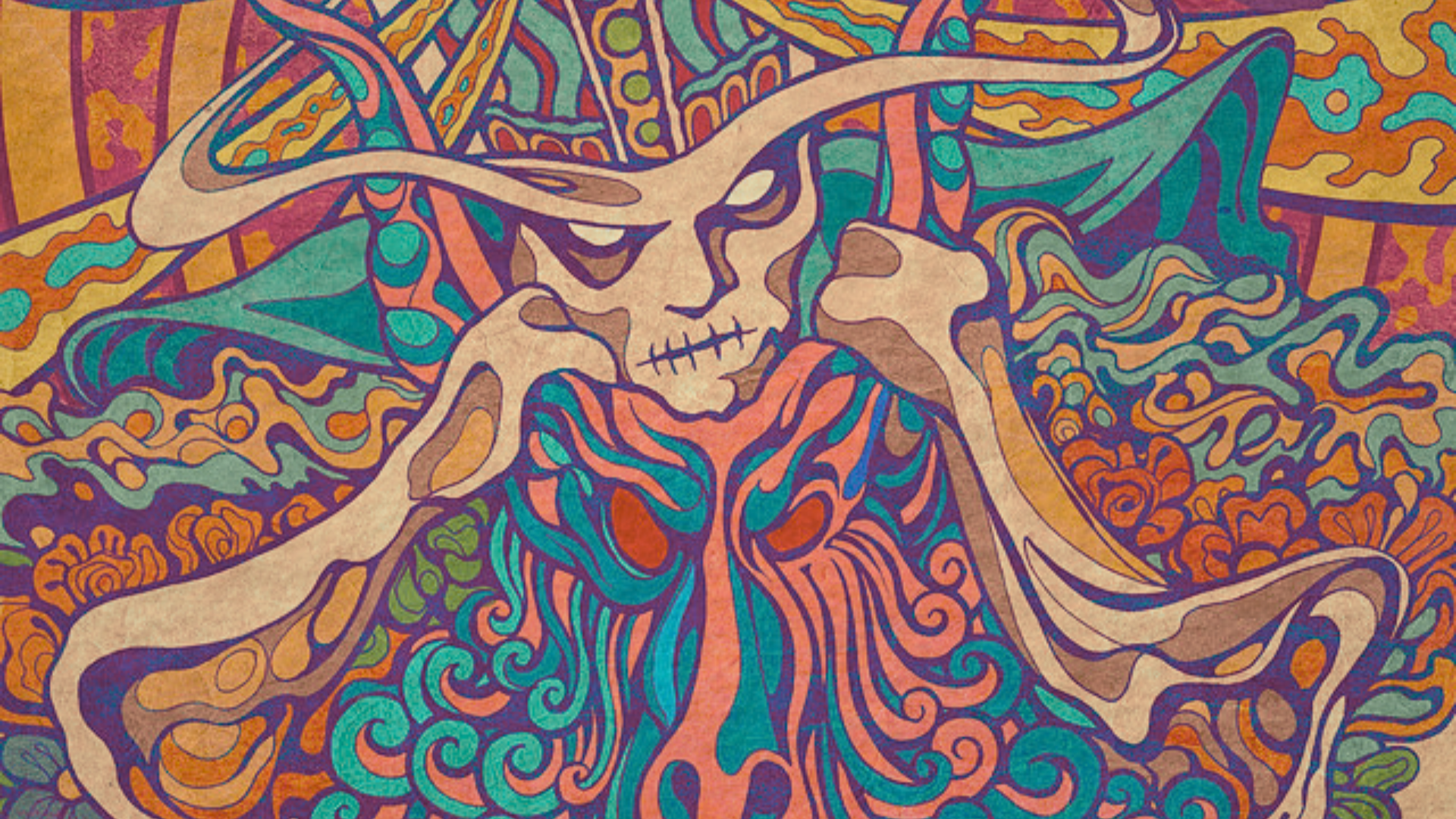
Alongside their frontman who dresses up as an evil pope, the band is composed of masked ghouls, and their stage shows are filled with exaggerated occult imagery and rituals. It’s the kind of thing you’d see in an old low-budget horror flick. And this campy theatricality is the vehicle they use to convey their themes and subject matter.
Some of their music, especially from their earlier work, speak out about the dark side of organised religious institutions, particularly the corruption, hypocrisy, abuse and trauma that can exist within their walls.
They tend to speak out about the lack of genuine spirituality that can exist within such institutions, and how those in positions of religious authority can project their own insecurities, prejudice, hatred, or desire for control onto their ideas of God, which we, as the masses, then submissively absorb.
As Tobias explained in an interview, “(Ghost’s music has) always been about mankind’s relationship with the concept of life and death, and God and divine presence or absence. Some songs are expressed with more specificity at a certain individual or a certain aspect of society.”
That being said, another large share of Ghost’s music is simply about the human experience. It’s about love and loss, and the fleeting joys and sorrows that come with being a card-carrying member of the human race.
“Mary on a Cross”, at its core, is about the bittersweet feeling of nostalgia, of longing for things past. It’s about the particularly uncomfortable part of adulting, where we come to realise that not everybody that we bond and connect with is meant to stay in our lives.
As Tobias remarked during a livestream, the song is “more about friendship and how, together with someone else, you might have been something at one point and then you ended up just not being like that.”
But of course, the lyrics are delivered in a way that is deliberately tongue-in-cheek.
He explained that “Go down” isn’t necessarily meant in a sexual sense. For one thing, it could also imply “go down in history”.
Meanwhile, he also made it clear that Mary in the song isn’t necessarily a reference to the Virgin Mary. He suggested that Mary could instead refer to Mary Magdalene, a figure in Christianity who was historically miscredited as a prostitute, but who may have occupied a much more significant role in Jesus’s life.
For Tobias, this serves as a symbol for the song’s broader theme: believing someone or something to be one thing, only to discover that it was something entirely different.
“It has very little to do with the mother of Jesus,” he said. “Because I don’t want anyone to believe that she was not a virgin.”
On a side note, given how the song speaks about the aftermath of “stardom” and “glamour”, I think it’s also fairly plausible that some of it was informed by Tobias’s relationship with his former bandmates, some of whom had once been very close friends.
As the story goes, four former members of Ghost sued him in 2017 over the band’s finances and business control. It was a highly publicised dispute that effectively forced him out of anonymity, and one that he would later look back on in deeply personal terms, describing the fallout as a betrayal. The case was ultimately decided in Tobias’s favour in October 2018, just about a year before “Mary on a Cross” was released.
Reflecting on the dispute in an interview while the lawsuit was still ongoing, Tobias said, “It’s always alarming, obviously, when you have people, and some of them used to be close to you, working diligently to destroy your life. That’s always a bummer. That sucks. Sometimes that happens in all parts of the world: at workplaces, in schools, in families, in relationships and friendships. There’s nothing new about it; it’s perfectly natural. It’s a sad avenue to ride down on, but it’s a part of life and it’s fine.” (Emphasis mine.)
But I might be stretching it here.
Anyhow, I’m glad that Tobias has left the meatier elements of the song open for interpretation. I believe that the playful, tongue-in-cheek lyrics are part of what makes the song great. They give us all the more space to personalise the song, to colour it with our own palette of meanings.
We don’t have to know who Tobias is addressing in the song, and we don’t have to know who Mary is, or what it means for her to be on a cross. But from the entire gamut of the song, we’re able to instinctively feel what the song is getting at on an emotional level.
Another element of the song that I really appreciate is its sonic vision, or how it believably recreates the sound of late-60s and early-70s rock.
This right here, is the bread and butter of Ghost. Right from the get-go, Tobias has built much of the band’s career around emulating and repurposing styles from past eras. But it especially shines in “Mary on a Cross”.
The organ is probably the clearest ingredient here, with its bright, slightly psychedelic tone which immediately evokes the era in question, while the drums maintain a brisk, danceable pulse. Added with the layered keyboards and reverbed vocals, the song genuinely feels like it’s meant to stand the test of time.
Personally, my favourite part of “Mary on a Cross”, which I can never get enough of, comes right at the end. After a slowed moment, the chorus returns a final time with the same melody, but with an almost unnoticeably different sequence of chords underneath it. And with that, it very subtly and gradually takes on a more bittersweet and visceral pull, an ache that only grows stronger and stronger from there.
Tobias repeats “nothing wrong with that” while he and the backing vocals continue to soar ever higher, making the line sound increasingly urgent with each pass. And by the final repetition, the line, which first sounded like a restrained declaration, has swelled into this excruciating purge of pent-up longing and regret.
This is also my favourite part when I share the song with first-timers, because I love watching their micro-expressions — the way they shift in their seats, and the look on their faces, visibly shaken as Tobias wails, and as the organ lingers for just a moment longer following the last syllable.
If this is your first time listening to “Mary on a Cross”, really, I envy you.
I’d give anything to rewind to that late-night drive, to those few minutes before the song became a permanent fixture of my world.
Buckle up as you head down the dark avenues.
Leave a Reply